
Makita 2012NB Planer Review: Snipe-Free Boards, Cleaner Shop



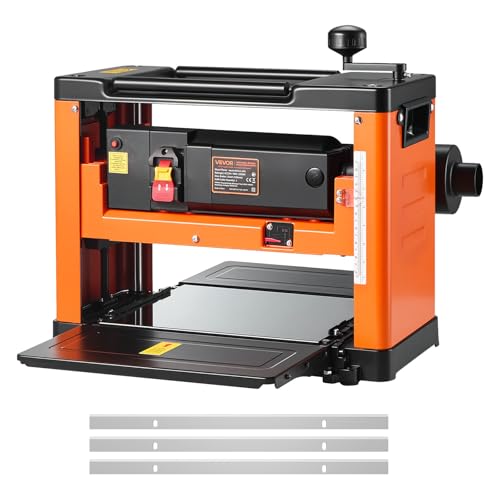
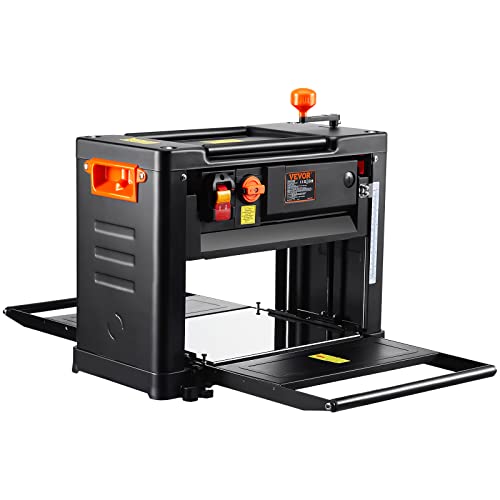
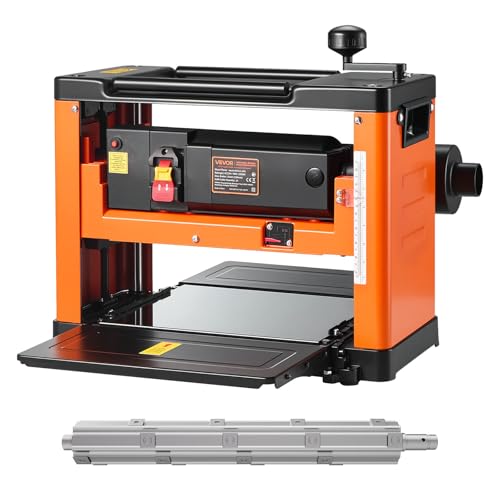
Makita’s 2012NB is a portable 12‑inch planer with a 15‑amp motor and 8,500 rpm cutter head that produces consistently thin, snipe‑minimal passes. It weighs 61 lb, handles up to 6‑3/32" stock, and uses reversible knives with quick two‑thumbscrew changes. Use the micro‑adjustable depth stop, slow feed and outfeed support to eliminate snipe. Dust collection is effective. Not for heavy stock removal; ideal for cabinetry and finishing. Further details cover setup, snipe tips, and comparisons below.
Main Points
- Produces minimal snipe when fed slowly and supported, delivering snipe-free boards with little post-planing sanding.
- Efficient dust collection helps maintain a cleaner shop and aligns with top planer recommendations.
- 12-inch cutter with a 15-amp, 8,500 rpm motor provides smooth finishing cuts but is not for heavy stock removal.
- Micro-adjustable depth stop moves cutterhead 5/64″ per crank for precise, repeatable thicknessing.
- Compact 61-lb portable design and quick two-thumbscrew reversible knives suit hobbyists and pros focused on furniture and cabinetry.
Quick Specs & Price Check

Why This Product Stands Out

Because it combines portability with precise controls, the Makita 2012NB stands out for small shops and mobile work.
It pairs a 12-inch cutter with a 6-3/32" maximum capacity, so users handle large stock without hauling heavy machines. The micro-adjustable depth stop, with a scale where one revolution equals 5/64", lets operators set cutting depth reliably.
12-inch cutter and 6-3/32" capacity handle large stock; micro-adjust stop (one revolution = 5/64") ensures precise depth.
Reversible knives and easy blade changes support consistent finishes and contribute to snipe-free boards when fed properly. Additionally, prioritizing dust collection efficiency helps keep the workspace cleaner and aligns with top planer recommendations.
- Compact 12" cutter for mobile jobs
- 6-3/32" max capacity, rivaling larger thickness planers
- Micro-adjust depth stop with precise scale
- Flat top design for temporary stock resting
- Reversible knives, simple maintenance
Follow expert advice: dial small increments, support stock, and expect clean results.
It frees users to work faster with fewer surface defects.
First Impressions & Build Quality

The planer presents a solid, no-nonsense build—teal factory finish, cast components and four-post, threaded-rod construction give visible rigidity, so inspect new units for paint chips and any loose fasteners on delivery.
At 61.0 lbs and measuring 19 1/064 in. x 30 3/8 in. x 15 25/32 in., it strikes a workable balance between shop stability and transportability, but plan for two people when lifting or moving—stairs are not friendly.
Assembly and fit are straightforward: the factory-set 9‑in. extension tables yield a 30 in. bed and a flat top for temporary stock, yet users should verify table alignment, run a test cut to confirm the head clamp, and re-torque the posts if any play appears.
For quieter operation and smoother finishes, premium planers often use helical cutterheads, which pair four-sided carbide inserts with dual-speed feeds for optimal performance.
Materials and Finish
Stability is built into the 61‑pound chassis, which dampens vibration and lets the 12‑inch cutterhead deliver clean passes with minimal chatter.
The materials feel industrial: cast and machined surfaces where precision matters, painted panels resisting shop wear. It is recommended to check cutters after transport; the 12-inch blade system aligns quickly.
Practical note: the knife-changing process uses two thumbscrews. Results are close to perfect with a smooth surface finish and minimal sanding required, yielding high-quality results for hobbyists and pros aiming to free themselves from rework.
- Cast main bed for rigidity
- Machined infeed/outfeed for consistent contact
- Accessible dust-collector hood attachment
- Quick two‑thumbscrew knife-changing process
- Finish requires minimal sanding, few passes
Takeaway: durable materials, tight tolerances, clear maintenance steps free users to create without fixes.
For shoppers comparing brands, note that Dewalt planers commonly feature three-knife cutter heads, which extend knife life and can deliver up to 179 cuts per inch on select models.
Weight and Portability
At 61.0 pounds, the Makita 2012NB sits in a practical weight class—heavy enough to damp vibration, light enough to move when needed. The machine balances durable construction with a compact footprint, 19 1/64" x 30 3/8" x 15 25/32", easing transport and storage. The flat top provides a steady rest for short stock runs. Four posts and threaded rods lock rigidity. Recommendation: lift with two people or use a stout cart for jobsite moves. Expect hobbyist-friendly portability, not single-handed hauling. Use tie-downs in transit. Bring two straps. Practical takeaway: the planer trades a little weight for stability; that’s a fair exchange for cleaner cuts and less chatter.
For shoppers comparing options, note that many top benchtop planers feature helical cutter heads and 15-amp motors, plus dust collection ports to keep the workspace clean.
| Feature | Specification |
|---|---|
| Weight | 61.0 lbs |
| Dimensions | 19 1/64" x 30 3/8" x 15 25/32" |
| Portability | Compact, transport-ready |
Assembly and Fit
Assembly presents little friction: the 2012NB ships largely preassembled and is ready to use out of the box.
It requires minimal assembly and a short setup: attach dust hood, check blades, set depth, benefiting from its portable design, 61 lb form and flat top for staging stock.
The four posts and threaded rods add rigidity, reducing chatter and improving performance at 8,500 rpm with a 15 amp motor.
Recommendations follow:
- Ready to use out box, verify blade alignment.
- Portable design eases placement; lift with two people.
- Use the flat top for temporary staging during setup.
- Tighten threaded rods to maintain rigidity under load.
- Inspect dust hood and secure before operation.
Verdict: solid, compact, and practical—free work, not flashy.
Liberates workshop setup freedom, reliably.
Performance Deep Dive

Although compact, the 2012NB brings serious power to the bench, driven by a 15‑amp motor at 8,500 rpm and capable of planing up to 12 inches wide and 6‑3/32 inches thick.
Performance is solid: the micro-adjustable depth stop moves cutterhead 5/64" per full crank, enabling precise thickness control. To reduce snipe, slow the feed rate, support stock with infeed and outfeed stands, and dial depth in smaller increments.
Knife changes use two thumbscrews; watch the nut driver around the motor housing. Expect quieter operation and clean finish at moderate passes. Recommend 1–2 light passes rather than heavy cuts.
Liberation comes from predictable results, predictable setup, and simple mitigation steps. Short, practical: measure, set, support, feed slowly, check edges. Accept small tradeoffs for better freedom.
Who Should (and Shouldn't) Buy This

Many woodworkers who need a portable, precise finishing tool will find the Makita 2012NB well suited. It planes up to 12" wide and 6-3/32" thick, delivering snipe-free boards and a consistent surface for finishing.
Ideal for hobbyists and pros who value a portable planer, user-friendly design, and finer finishing. Not a budget pick; price-conscious buyers may hesitate. Not for heavy stock removal or thicker boards.
- Best for furniture and cabinetry up to 12" wide.
- Good for those wanting minimal sanding and snipe-free boards.
- Appeals to users who want quick blade changes and micro-adjustable depth.
- Avoid if needing a heavy-duty, high-volume planing workhorse.
- Choose it when liberation from sanding and cleanup matters; dust hood still helps.
Buy it for finish quality; avoid heavy ripping elsewhere.
Top 3 Competitors Compared
Three clear alternatives stand out to the Makita 2012NB, each serving a different priority: DeWalt’s 13" 3-knife, 2-speed planer for minimal snipe and better board support; Ridgid’s 13" three-blade model for shop-duty durability and steady performance; and Craftsman’s 15‑amp benchtop planer as the budget, value-driven choice.
Each offers tradeoffs. DeWalt reduces snipe with built-in infeed and outfeed tables, scores high in user satisfaction, and pairs with shop built-in dust systems.
Ridgid brings a robust design, consistent thickness planer results, and serviceable cutter longevity.
Craftsman sacrifices a knife for lower cost, high cutter speed and basic capability; it frees buyers from high spending.
Practical buyers should match priorities: snipe control, durability, or price, then pick accordingly. Measure needs, shop setup, and desired finish before buying.
-o-
Final Verdict
While priced above many entry-level benchtop planers, the Makita 2012NB justifies the premium with consistent, snipe-free results and a finish that typically needs only light sanding.
Priced higher than basic benchtop planers, the Makita 2012NB delivers consistent, snipe-free finishes needing minimal sanding.
It delivers snipe-free boards, clean edges, and reliable planer features that free users from repetitive rework. The 12-inch width and 6-3/32-inch capacity make it versatile for varied projects.
Durable build and quieter operation support long term quality performance.
- Produces snipe-free boards with minimal sanding.
- Compact 61 lb design for portable shop freedom.
- 12 in width, 6-3/32 in max thickness capacity.
- Interna-Lok clamp and dust hood improve clean edges.
- Higher price, but durable, versatile, quality performance.
Recommendation: buy if prioritizing precision and reduced finish work. A clear choice for those seeking liberated workflow, less waste, and faster project completion.
Frequently Asked Questions
What Is the Minimum Thickness for Makita 2012NB?
Minimum thickness is 1/8 inch. It offers minimum thickness benefits, reflects planer thickness recommendations, encourages an ideal thickness range near 1/8–1/4 inch, advises thickness adjustment techniques, and recommends thickness measurement tools for liberated, precise woodworking.
What Is the Width of the Makita Planer?
Twelve inches wide, twelve inches capable, the Makita 2012NB states its planer dimensions clearly; its portability features and manageable motor power attract hobbyists, user reviews praise finish quality, and maintenance tips encourage long-term liberated craftsmanship.
How Big Is the Makita Thicknesser?
It measures about 30 by 19 by 16 inches and weighs 61 pounds; it pairs planer weight comparison, dust collection efficiency, motor power rating, user friendly features, and maintenance tips for liberated workshops and independence
 Grizzly G0815 Planer Review: 3 HP, 15-Inch, Snipe Tamed
 Powermatic 201 Planer Review: 22-Inch, 7.5HP, No 3-Phase
Budget-Friendly Woodworking Tools Under $100: Essential Deals for Hobbyists




Premium Woodworking Equipment: Professional-Grade Tool Savings


If you want to know other articles similar to Makita 2012NB Planer Review: Snipe-Free Boards, Cleaner Shop you can visit the Planers category.
This is also interesting