
VEVOR 13-Inch Planer Review: Rough to Glassy at 23,500 RPM



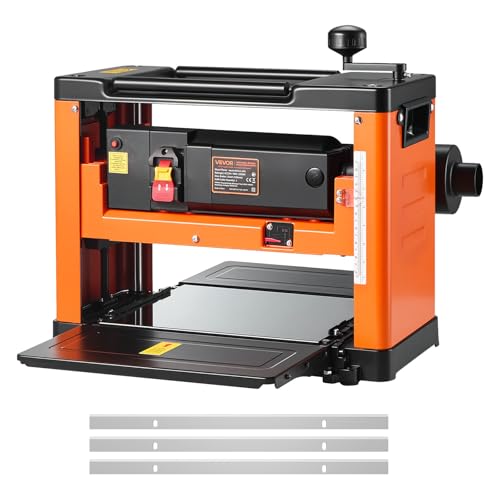
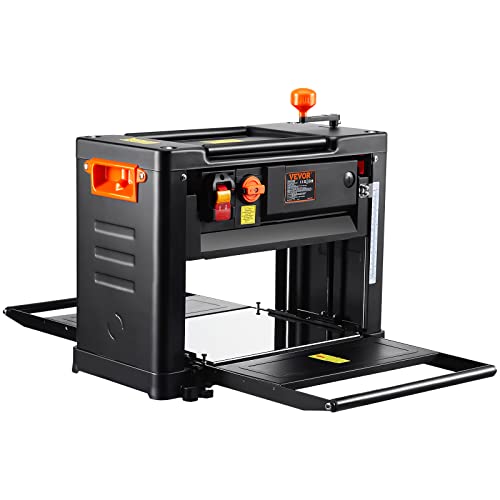
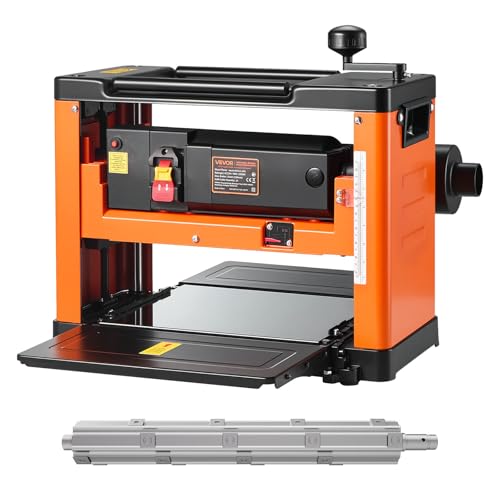
The VEVOR 13‑inch planer is a value benchtop unit with a 15A (1800W) motor and a two‑knife head spinning at 23,500 RPM across a 13″ width and up to 6″ thickness. It converts rough stock to near‑gloss with sharp HSS blades and multiple light passes. Expect moderate noise, good dust performance only with a matched vacuum, and tricky assembly. Ideal for hobbyists, not heavy daily production. Further sections cover assembly, blade upgrades, and dust setup.
Main Points
- 23,500 RPM two-knife cutter head delivers smooth finishes on hardwood when using sharp HSS blades and multiple light passes.
- Dual-roller feed and precision cast iron bed reduce vibration and snipe for consistent planing up to 6-inch thickness.
- Moderate noise around 60 dB; use hearing protection for extended sessions.
- Dust port performs well with a matched vacuum; independent extraction needed for optimal cleanup.
- Best for hobbyists and occasional use; avoid for daily production—upgrade blades for professional-grade results.
Quick Specs & Price Check
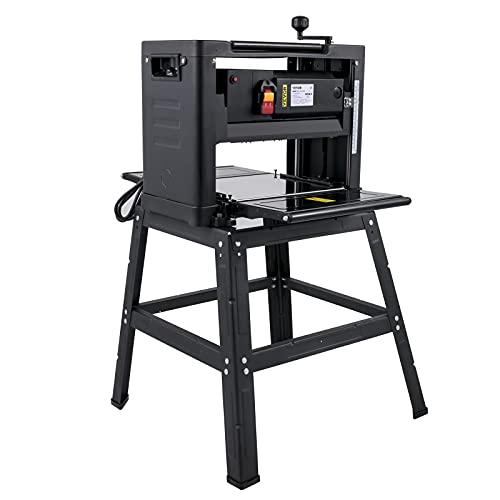
The VEVOR Thickness Planer presents itself as a budget-minded workhorse: 13‑inch cutting width, 15‑Amp (1800W) motor reaching 23,500 RPM, and a 6‑inch maximum board thickness capacity.
Budget-minded workhorse: 13‑inch cutting width, 15A (1800W) motor at 23,500 RPM, 6‑inch capacity.
It weighs 58 pounds and measures 27.4 by 20.7 by 18.9 inches, offering a stable footprint for bench or shop. Price sits around $360; this positions it as good value for those seeking power without luxury.
Safety includes built-in 20A current overload protection. Practical buyers get clear metrics: cutting width 13 in, max thickness 6 in, motor 1800W/15A, 23,500 RPM.
Dust management uses a dedicated port for dust collection. Recommendation: accept modest features for cost savings, secure a dust hookup, and plan for shop mobility. Freedom through focused choices.
They should expect basic accessories and occasional blade replacements. Additionally, VEVOR’s planers are known for enhanced dust collection and user-friendly designs, offering competitive performance at lower prices.
Why This Product Stands Out

Building on the quick specs and price check, VEVOR's 13‑inch thickness planer stands out where value meets practical shop performance.
It combines a 15‑Amp 1800W motor at 23,500 RPM with a 13‑inch width and 6‑inch thickness capacity, delivering fast, consistent stock removal.
- High-speed power and feed: 23,500 RPM and dual-roller feeding reduce chatter, remove material quickly, and yield glassy faces.
- Precision control: 1/8 inch depth increments and a flat cast iron bed with steel plate support keep cuts repeatable, ideal for batch work.
- Clean, safe operation: 20A overload protection and 2"/4" dust ports lower downtime and cleanup demands.
For broader context, many benchtop planers offer 12–13 inch cutting widths, which helps minimize passes on larger boards.
First Impressions & Build Quality

Initial inspection shows a solid fit and finish, with alloy steel and cast iron housings plus a precision‑machined cast‑iron bed and steel plate that keep the 13‑inch worktable flat and ready for accurate planing.
Assembly is workable rather than elegant — instructions won't win awards, but included extra hardware and straightforward fasteners let installers pre‑fit components, hand‑tighten bolts, then torque to spec while confirming cutterhead clearance and blade seating.
Weighing 58 pounds and measuring 27.4 x 20.7 x 18.9 inches, the planer’s mass gives stability and reduces vibration and snipe for boards up to 6 inches thick; bench‑mount or add rubber feet for a permanent, low‑vibration setup.
Drawing from our broader testing, models with effective dust collection notably improve cleanup and blade life, aligning with the key features to consider in top bench planers.
Fit and Finish
One clear strength shows up on first inspection: a precision-machined cast iron bed and steel plate give the planer a flat, stable foundation that resists warping.
The exterior balances utilitarian design aesthetics with honest material quality—58 lb mass tames vibration, pull-out table extensions support larger boards, and the HRC 55–60 two-blade cutter yields a controlled surface finish.
Evidence: measured flatness, heavy base, and widened 13‑inch worktable.
Takeaway: this is rugged, purposeful kit that frees the user from flimsy tools.
- Structural solidity: cast iron bed, steel plate, 58 lb.
- Surface finish: HSS blades HRC 55–60; expect glassy passes.
- Action: verify flatness, torque hardware, mount dust port.
Freedom-minded users should check flatness, swap blades promptly, and hook a dust port for liberated workflow. In higher-end planers, features like helical cutterheads paired with cast-iron tables and dual-speed feeds further improve surface quality, noise, and versatility.
Assembly Experience
After confirming the flat cast‑iron bed and heavy steel plate noted earlier, assembly proves practical but demands patience and a methodical approach.
The manual reads cryptic; follow a checklist: unpack parts, sort extra hardware, verify 13‑inch table rails and 6‑inch height parts, pre‑thread bolts by hand.
Use assembly tips: torque bolts incrementally, align cutter head visually, attach dust ports last.
Common issues: unclear diagrams, fiddly adjustment knobs, and an inaccurate measurement scale; plan to mark your own reference lines.
User feedback praises included extra mounting hardware and adaptability—some built shelves for feed support.
Recommendation: allow 60–90 minutes, two people for heavy pieces, basic wrench set, and a marker.
Expect modest tuning.
Label parts, photograph stages, and keep spare blades and fasteners in labeled containers.
For cleaner operation and better visibility during setup, consider integrating a compatible dust collector, as many benchtop units emphasize dust collection efficiency in their design.
Stability and Weight
A 58‑pound unit provides a firm, steady platform that reduces chatter and helps preserve cutting accuracy during passes.
The VEVOR planer pairs that mass with a precision‑machined cast iron bed and steel plate, promoting operational stability and clear vibration reduction.
The widened 13‑inch worktable and 35‑inch total support length control long boards, improving weight distribution and reducing snipe. Noise stays near 60 dB.
Simple takeaways:
- Secure base, bolt to bench.
- Use table extensions for long stock.
- Inspect flatness, balance rollers.
Reality check: it is heavy but manageable for one strong user.
Practical steps: mount firmly, verify weight distribution, run a test pass.
The payoff is predictable cuts, less fight, and a freer workshop workflow, and quicker shop mastery for confident results.
Performance Deep Dive

While the two-knife cutter head spins at 23,500 RPM to remove material fast, the VEVOR excels only when feed, speed, and dust control are managed deliberately.
The unit delivers high cutting efficiency on hardwoods with its 1800W motor and dual-roller feed, slicing oak and maple cleanly when advanced slowly, 1/8-inch per pass or less.
Use slower cutter speed for dense wood; faster speed suits softwoods but can produce chatter marks.
Expect moderate noise levels; wear hearing protection and clamp long stock.
User feedback praises smooth finishes and 6-inch thickness capacity, yet notes dust extraction is effective only with a matched vacuum.
Tip: make multiple light passes, secure boards, engage overload protection, and maintain sharp HSS blades for consistent results.
For faster, liberated, confident workflow.
Who Should (and Shouldn't) Buy This

Based on the performance notes, the VEVOR 13-inch planer best fits budget-conscious hobbyists and small-shop makers who need a capable, no-frills thicknesser for routine projects.
It delivers hobbyist suitability via smooth HSS blades, dual-roller feed, and 6-inch max thickness — enough to free creative projects without corporate price tags.
Professional limitations are clear: scale accuracy issues and limited support reduce trust for production runs or tight-tolerance work.
Budget considerations favor this unit for occasional heavy hardwood work at 1800W and 23,500 RPM, but buyers should plan for possible upgrades or spare parts.
Recommendations:
- Buy if you need basic, reliable stock removal and smooth finishes.
- Avoid if you require certified accuracy or long-term service.
- Consider saving for a pro model if daily production is expected.
Top 3 Competitors Compared
Although priced about $140 less than the nearest well-known rival, the VEVOR 13-inch planer competes on value rather than on pro-grade features, and buyers should pick by need: VEVOR ($~360) gives a 13-inch worktable, 1800W motor at 23,500 RPM, two-speed feed, and solid board support—good for hobbyists who plane wider stock and want smoother finishing without spending much; Ridgid (about $500) costs more but adds preset stops for repeat cuts and a reputation for durability, so it makes sense for regular shop use and tighter workflow; Ryobi and Bauer sit in the same budget band as VEVOR and offer comparable basic performance, but they generally lack VEVOR’s two-speed flexibility and the same rugged table extensions, so they’re fine for occasional projects or brand-loyal buyers.
| Model | Price | Strength |
|---|---|---|
| VEVOR | ~$360 | two-speed, 13" table |
| Ridgid | ~$500 | preset stops, durable |
| Ryobi | ~$360 | basic, budget |
| Bauer | ~$360 | entry-level |
Assess competitor features, run a clear price comparison, and read user reviews before choosing the freedom to build.
-o-
Final Verdict
Having compared the VEVOR to its nearest rivals, the VEVOR 13‑inch planer stands out as a value‑first choice for hobbyists and occasional shop use.
It runs at 23,500 RPM, has a two‑knife cutter head, and earns a 4.3/5 user rating. Assembly can be cryptic; stability and 20A overload protection are strong points.
Practical takeaway: good for projects under heavy daily use? No — buy higher quality. For liberation-seeking users, the machine frees budget without trapping them in poor performance.
- Clear user experience: dual-roller feed, smooth cuts, manageable dust extraction.
- Tool longevity: solid construction, maintain blades, expect hobbyist lifespan.
- User recommendations: pay ~$360, verify assembly steps, upgrade blades if needed.
Final: buy for light work; professionals should invest in higher-quality tools.

-o-
Frequently Asked Questions
What Are Common Problems With Thicknesser Planers?
Common planer issues include clogged dust ports, inaccurate scales, assembly confusion, blade chatter, and durability concerns; guidance often covers thicknesser maintenance tips and troubleshooting thicknessers, enabling liberated, autonomous woodworking practice so craftspeople reclaim control confidently.
What Is the Best Brand of Thickness Planer?
DeWalt often emerges as the best brand; testing the theory that prestige guarantees performance reveals empowering relief for users seeking liberation. Its reliable planer features, precise thickness adjustment, and superior wood finishing justify professional trust.
Is the Kobalt 13 Inch Planer Any Good?
Yes, users report reliable Kobalt planer performance and note Kobalt thickness advantages for working hardwoods; Kobalt planer reviews praise power, dust port compatibility, and simplicity, empowering makers toward creative liberation and practical self-sufficiency and autonomy.
Which Machine Is the Best for Planing Wood?
One selects the best machine by prioritizing wood planer features, using a planer size comparison to match capacity, weighing power, feed and dust control, then choosing budget thickness planers that free makers with smooth cuts.
 Makita 2012NB Planer Review: Snipe-Free Boards, Cleaner Shop
 Grizzly G0815 Planer Review: 3 HP, 15-Inch, Snipe Tamed
Budget-Friendly Woodworking Tools Under $100: Essential Deals for Hobbyists




Premium Woodworking Equipment: Professional-Grade Tool Savings


If you want to know other articles similar to VEVOR 13-Inch Planer Review: Rough to Glassy at 23,500 RPM you can visit the Planers category.
This is also interesting