
Shop Fox W1874 Planer Review: Near-Zero Tearout, Half Noise


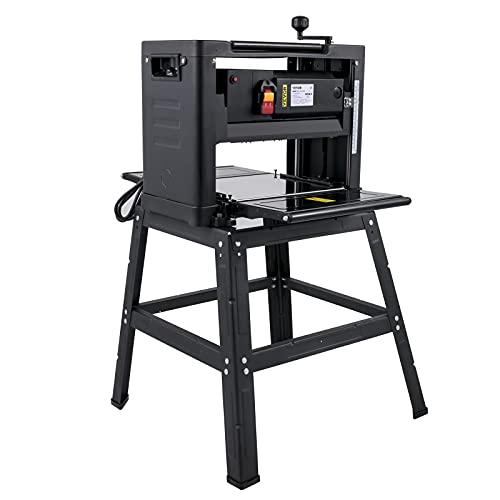

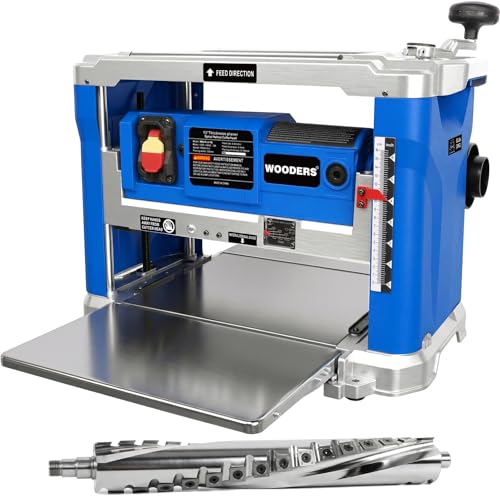
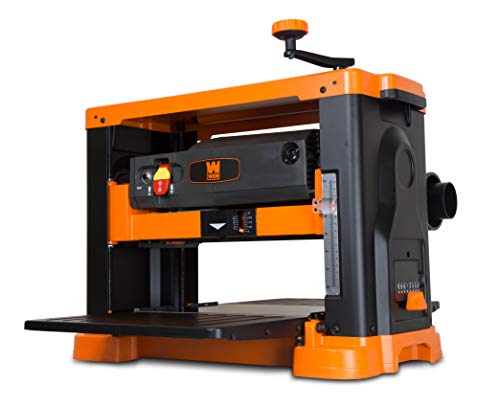
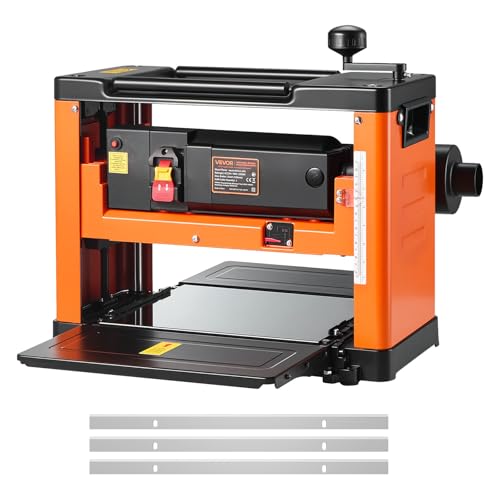
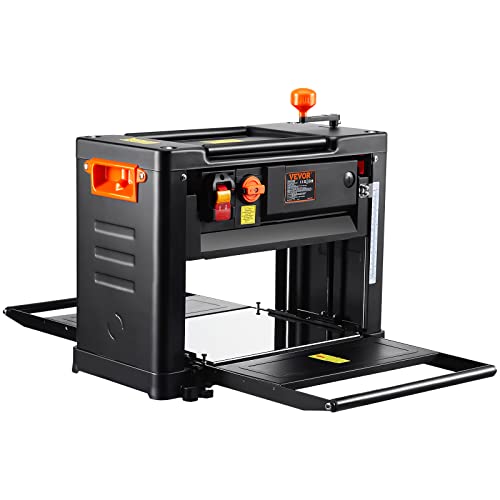
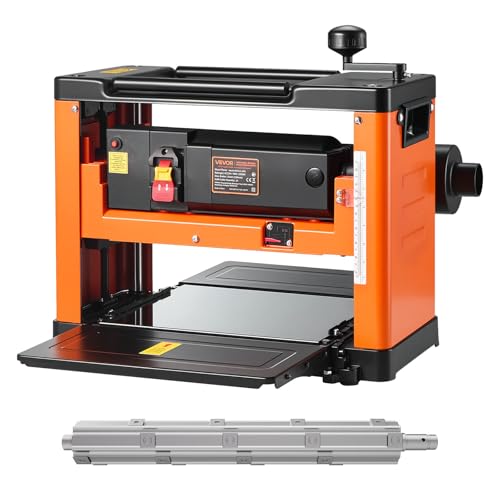
The Shop Fox W1874 is a heavy 15" planer with 3 HP motor and 4‑row helical head using 48 carbide inserts, delivering near‑zero tearout and much lower noise than straight knives. Two feed speeds (16/28 FPM) and a 6" max cut balance fine finish and throughput. Build is solid, stable, and shop‑grade; assembly is straightforward. Best for production shops and serious hobbyists; skip if space or mobility matters. Continue for full specs, tests, and guidance.
Main Points
- 4-row helical cutterhead with 48 carbide inserts delivers near-zero tearout and ultra-smooth surfaces on difficult grain.
- Carbide inserts reduce noise and prolong cutter life, lowering downtime compared with straight knives.
- Two feed rates—16 FPM for fine finishing, 28 FPM for higher throughput—balance finish quality and production speed.
- Sturdy cast-iron base, four-column height adjustment, and fixed-table design ensure stability and repeatable thicknessing.
- Best for production shops and serious hobbyists; heavy 374-pound footprint limits mobility and small-shop suitability.
Quick Specs & Price Check

Why This Product Stands Out

While aimed at production shops, the W1874 also suits serious hobbyists who can provide a 230V circuit and a dedicated floor area. It also pairs well with robust dust collection to handle chips from helical cutterheads as noted in top industrial planer recommendations.
The Shop Fox W1874 stands out for practical reasons: a 4-row helical cutterhead with 48 carbide inserts yields ultra-smooth finishes and near-zero tearout, reducing sanding time.
Its powerful 3 HP motor at up to 5200 RPM cuts through dense hardwood without bogging. The fixed table height design supports permanent roller setups, boosting production efficiency for repeat jobs.
Two selectable speeds deliver adjustable feed rates—16 or 28 FPM—so operators trade finish for throughput on demand. Recommendation: use slower feed for fine stock, faster for bulk removal.
Expect lower downtime and quieter operation overall. Clear, useful tool. Buy it for results, not for charm.
-o-
First Impressions & Build Quality

Out of the box the Shop Fox W1874 presents as a no-nonsense production planer: clean white finish, preinstalled 4-row helical cutterhead, and a bulky cast-iron base that feels substantial, though minor paint chips or scuffs from shipping are possible.
At 374 pounds with a 3 HP motor and four-column supports, the unit resists vibration and tracks true; the fixed-table layout and ready infeed/outfeed roller capability underline its production intent.
During assembly verify base bolts, test the twin gas struts, set headstock height and clearances, inspect the oil-bathed 2-speed gearbox and top up if required, and square the permanent roller setup before the first pass—do this and the planer runs reliably; skip it and performance will suffer.
Professionals should also confirm dust collection compatibility, ideally with a five-inch dust chute and robust internal routing as recommended for dust control, to maintain surface quality and tool longevity.
Out of Box Appearance
The cast-iron base and hefty cabinet make the W1874 read as a shop-ready machine the moment the crate is opened.
Visuals are professional: clean paint, labeled controls, and heavy panels that imply permanence.
Recommend unpacking with a helper; it's about 375 pounds and will not slide easily.
Inspect the helical cutterhead and carbide rows for shipping marks, remove packing, then check fasteners.
The fixed table height design shortens setup time, so plan infeed/outfeed placement before assembly for efficient setup.
Power test the 3 HP motor at low feed, listen for bearing noise, then increase speed.
Expect ultra-smooth finishes once calibrated.
Note warranty info and contact customer service with serial details if anything is amiss.
Clear, quick steps save time.
Start with the basics first.
For context on alternatives, many woodworkers compare helical heads to spiral cutterheads, which in 2025 reviews are praised for smoother finishes and improved dust collection efficiency.
Sturdy Cast-Iron Base
A heavy cast-iron base, tipping the scales at roughly 374 pounds, announces that this planer was built to stay put and cut clean.
It sits on a sturdy cast-iron base that anchors the machine, giving stability and reducing vibrations for consistent, precise cuts. The base's mass boosts durability and resists movement, freeing the craftsperson to pursue cleaner work and greater autonomy.
The fixed table and four-column supports carry the 3 HP motor without flex; that matters for repeatable results.
Practical advice: place on level concrete, bolt down in high-use shops, and leave clear infeed/outfeed paths.
- Solid visual weight: a floor-mount that refuses to walk.
- Thick flange edges: look, feel, trust.
- Column lines: rigid, predictable travel.
- Quiet confidence: vibration damped, cuts liberated.
Freedom to create.
For context, premium planers in 2025 often feature helical cutterheads, cast-iron tables, and dual-speed feeds to maximize finish quality and reduce noise.
Assembly and Adjustments
Although much of the W1874 arrives pre-assembled, the installer should still budget time for a careful, hands-on setup and alignment.
The assembly is straightforward: uncrate, bolt the cast iron base, verify table and fence, and confirm cutterhead rotation before power-up. The fixed-table design favors shop freedom, allowing permanent infeed/outfeed roller placement for repeatable runs. For liberation-minded operators, that means fewer interruptions and more consistent stock control.
Adjustments are simple and purposeful. Sturdy four-column supports with twin gas struts deliver easy height adjustments; check preload and gas-strut seating.
With a 3 HP motor and 5200 RPM cutterhead the machine shows robust performance and low vibration when tightened.
Recommendation: allow 45–60 minutes, use basic tools, torque fasteners to spec, then test with scrap. Expect reliable results.
Performance Deep Dive

Smoothness is the W1874’s strongest suit, driven by its 4-row helical cutterhead loaded with 48 carbide inserts. The Fixed Table Planer W/Helical delivers ultra-smooth finishes; carbide inserts last longer, and cutting edges make cleaner passes with less chatter.
At 5200 RPM and two feed rates (16, 28 FPM) it balances speed and finish. Noise level drops versus straight knives. Permanent infeed/outfeed setup boosts production efficiency, and results in shorter cycle time and fewer adjustments.
Recommendations: 16 FPM for figured wood, 28 FPM for stock removal.
Visualize results:
- glassy faces, no tearout
- crisp edges, consistent thickness
- quick stock passes, steady feed
- low hum, shop noise
Expect long runs between changes. Solid choice for liberated shops.
Maintenance: routine inspection, simple cleaning regularly.
Who Should (and Shouldn't) Buy This

If throughput and surface quality drive purchase decisions, the W1874 is built for production-minded shops.
It pairs a powerful 3 HP motor with a helical cutterhead to deliver ultra-smooth finishes and near-zero tearout. The two-speed gearbox enables a high production feed rate of 28 FPM, or a slower 16 FPM for finer passes.
Its fixed table design supports permanent infeed/outfeed roller setups, boosting throughput and repeatability. With a 15-inch width and 6-inch height capacity it tackles larger projects without hesitation.
Users will note quieter operation compared with conventional planers, improving shop comfort.
Downsides are clear: the substantial weight of 374 lb and fixed footprint limit hobbyists and small spaces.
Recommendation: buy if you need production efficiency; skip if mobility or minimal space matter, seriously.
Top 3 Competitors Compared
When comparing the W1874 to its closest rivals, three clear options emerge: Grizzly’s larger 20‑inch planers, Powermatic’s premium offerings, and the older straight‑blade models aimed at budget shops.
The Shop Fox W1874 uses a four‑row helical cutterhead with carbide inserts, runs to 5200 RPM, and delivers ultra-smooth finishes with minimal tearout.
Grizzly trades width for a shorter warranty period; Powermatic trades cost for refinement.
The W1874’s fixed table supports permanent infeed/outfeed rollers and boosts efficiency in production.
Competitors' takeaways follow.
- Wide throat, heavy steel frame, and wider boards.
- Quiet helical rows, gleaming chips, knife edges lasting.
- Simple straight blades, noisy, cheap replacement cycles.
- Dealer service, two‑year warranty, parts access.
Recommendations: choose by width, service model, and long‑term cost. Choose freely.
-o-
Final Verdict
While not the widest planer on the market, the W1874 balances power, finish quality, and durability in a package aimed at small professional shops and serious hobbyists.
The Shop Fox W1874 uses a 4-row helical cutterhead with 48 carbide inserts to deliver ultra-smooth finishes and near-zero tearout. With 15-inch cutting width and 6-inch maximum cutting height, it handles thick stock without fuss.
4-row helical cutterhead with 48 carbide inserts delivers ultra-smooth, near-zero-tearout finishes on 15-inch wide, 6-inch high stock
Two feed speeds, 16 and 28 FPM, let users choose finish or speed, boosting efficiency in production. Noise levels are lower than straight-knife models, improving shop freedom.
Carbide inserts last far longer, reducing downtime and cost.
Recommendation: buy if one values consistent finish, robustness, and predictable throughput; otherwise seek wider capacity.
Maintenance is simple, and warranty supports long-term peace of mind fully.
Frequently Asked Questions
Is the Shop Fox Planer Any Good?
Yes, Shop Fox satisfies liberated makers: user reviews praise machine durability and reduced noise levels, noting ease operation; performance ratings are strong, maintenance tips accessible, and price comparison shows solid value, empowering independent woodworking freedom.
How Do You Adjust Your Planer to Eliminate Sniping?
They adjust planer settings for snipe prevention: set feed rate to match stock, perform roller adjustment, level infeed table and outfeed table, guarantee board alignment and maintain blade sharpness, empowering liberated, confident woodworking and autonomy.
What Is the Difference Between Shop Fox W1877 and Grizzly G0940?
Like a gate opening to plains, the Shop Fox W1877 prioritizes precision while the Grizzly G0940 prioritizes capacity. Grizzly Comparison, Planer Specifications, Performance Differences, Price Points, Build Quality, User Reviews, Feature Highlights empower liberated choice.
 Hands-On Review: 13-Inch 2000W Planer Eats 3mm, Snipe Tamed
 VEVOR 13-Inch Planer Review: Rough to Glassy at 23,500 RPM
Budget-Friendly Woodworking Tools Under $100: Essential Deals for Hobbyists




Premium Woodworking Equipment: Professional-Grade Tool Savings


If you want to know other articles similar to Shop Fox W1874 Planer Review: Near-Zero Tearout, Half Noise you can visit the Planers category.
This is also interesting