
12 Best Professional Woodworking Planers of 2025 — Powerful Picks for Your Shop


Professional planers for 2025 focus on 15–20" widths, 3–5 HP motors, and helical or spiral cutterheads with carbide inserts. Expect 16–40 fpm feed speeds, 3/32" per-pass capacity, and 230V single-phase power in most shop units. Prioritize knife life, dust collection ports, stable elevation, and minimal snipe. Avoid underpowered motors and poor service. Budget for inserts, wiring upgrades, and routine alignment. Check warranty terms and spare-parts availability too. Model comparisons and shop-fit guidance follow below soon.
- Main Points
- JET 20-Inch Planer (Model JWP-208-1)
- Grizzly Industrial G0891-15 3 HP Fixed-Table Planer with Helical Cutterhead
- JET 15-Inch Planer, Helical Cutterhead, 3 HP, 230V 1Ph (Model JWP-15BHH)
- Grizzly Industrial G0453Z - 15 3 HP Planer w/Spiral Cutterhead
- Powermatic 20-Inch Planer (Model 209), 5 HP, 230V 1Ph
- Powermatic 15-Inch Planer, Helical Cutterhead, 3 HP, 230V 1Ph (Model 15HH)
- Shop Fox W1874 15 3 HP Fixed-Table Planer w/Helical Cutterhead
- Shop Fox W1864 20 5 Hp Planer
- Powermatic 20-Inch Planer (Model 209)
- Grizzly Industrial G1021X2-15 3 HP Extreme Series Planer with Helical Cutterhead
- KAKA INDUSTRIAL 15-inch Benchtop Thickness Planer with Spiral Cutterhead (WDP-4215B)
- Grizzly Industrial G1021Z - 15 3 HP Planer with Cabinet Stand
- Factors to Consider When Choosing Professional Woodworking Planers
- Frequently Asked Questions
- Final Thoughts
Main Points
- Prioritize planers with 3–5 HP motors and 15–20" width for production-level capacity and smooth handling.
- Choose helical or spiral cutterheads for quiet operation, minimal snipe, and superior surface finish.
- Check power requirements, as many professional planers require 230–240V circuits and dedicated breakers.
- Assess maintenance needs: replaceable carbide inserts, easy knife access, and regular table and gearbox inspections extend longevity.
- Compare warranties, dust-collection effectiveness, feed speeds, and real-world reviews before narrowing to the top 12 picks.
JET 20-Inch Planer (Model JWP-208-1)

- Four high-speed steel cutter knives produce faster, smoother cutting
- Two-speed gear box with automatic chain tensioner lets you adjust the feed rate to meet your needs
- Large cast iron, precision-ground table for precise workpiece support
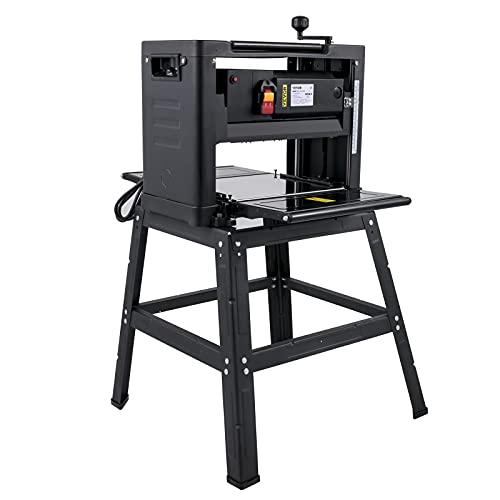
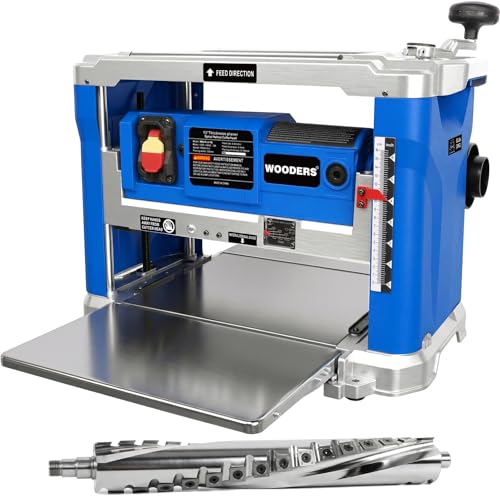
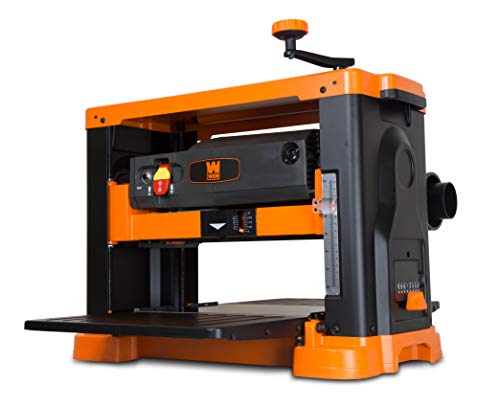
The JET JWP-208-1 is aimed squarely at professional shops that need a heavy-duty 20‑inch planer for steady, high-volume work—not a weekend hobbyist's garage toy. It packs a 3 HP TEFC motor, 230V single-phase power, and a four-knife cutterhead delivering 20,000 cuts per minute. Table is cast iron, 20‑inch width, 3/32" max cut, 0.09" depth per pass. Feed rates selectable via two-speed gearbox; three steel infeed and three rubber outfeed rollers reduce snipe. Recommend workshop dust collection to the 4" port, weekly talc for table care, and periodic knife checks. Expect robust performance; verify part completeness on delivery. No exceptions.



Best For: Professional woodworking shops and high-volume woodworkers who need a heavy‑duty, 20‑inch planer with industrial 3 HP, 230V performance and durable construction.
Pros:
- Powerful TEFC 3 HP motor with three V‑belt drive and two‑speed gearbox for smooth, consistent feed and high throughput.
- Four‑knife cutterhead delivering 20,000 cuts/min and a precision ground cast‑iron table for clean, wide (20") planing.
- Three steel infeed and three rubber outfeed rollers to reduce snipe, plus a 4" dust port and a 5‑year (2‑year commercial) warranty.
Cons:
- Requires 230V single‑phase power and draws 18 A — not suitable for standard 120V home outlets and may need an electrician.
- Very heavy (640 lb) and large footprint, requiring shop space and handling equipment for installation.
- Some users report dust collection issues, occasional missing parts on delivery, and the need for regular maintenance (knife checks, table care) and possible accuracy adjustments over time.
Grizzly Industrial G0891-15 3 HP Fixed-Table Planer with Helical Cutterhead

- Motor: 3 HP, 230V, single-phase
- Table size w/cast-iron wings: 15-1/2"W x 49"L
- Maximum cutting width: 15"
Heavy-duty shops that plane long, wide stock will find the Grizzly G0891-15 a practical, work-ready choice. It pairs a 3 HP, 230V single-phase motor with a 15-1/2" x 49" cast-iron table and a 15" cutting width, handling up to 6" thickness and down to 3/16". The helical cutterhead runs quiet and slices large boards cleanly. Fixed infeed/outfeed tables stabilize long stock. Inspect gearbox plugs; some machines leak oil. Tighten screws and apply oil-resistant thread sealer during setup. Grizzly tech support is responsive. Recommended for serious shops that need power, stability, and quiet performance. Consider Amazon's 30-day return guarantee today.
Best For: Heavy-duty woodworking shops and professional woodworkers who need a quiet, powerful 3 HP, 230V planer that can handle long, wide stock up to 15" wide and 6" thick.
Pros:
- 3 HP, 230V single-phase motor provides the power to plane large, heavy boards.
- Helical cutterhead runs quietly and produces clean, smooth surfaces.
- Large 15-1/2" x 49" cast-iron fixed infeed/outfeed tables stabilize long stock for accurate planing.
Cons:
- Some units have reported gearbox oil leaks—requires inspecting plugs, tightening screws, and using oil-resistant thread sealer.
- Requires 230V power and significant shop space (49" x 25" x 47.5"), limiting use in small shops or garages.
- Fixed-table design is bulky and not portable, and setup/maintenance may be needed for optimal performance.
JET 15-Inch Planer, Helical Cutterhead, 3 HP, 230V 1Ph (Model JWP-15BHH)

- HELICAL CUTTERHEAD: Helical cutterhead houses 48 staggered carbide knives that are engineered to...
- IMPROVED CUTS: Innovative Precision Air Strut System (PASS) provides consistent upward pressure on...
- HEAVY DUTY DESIGN: Precision-ground cast iron table and four-post design for stability and...
Pro shops that routinely surface wide, thick stock will value the JET JWP-15BHH for its combination of capacity and consistent finish. The 15-inch, 3 HP, 230V single-phase planer handles 6" stock and cuts up to 1/8" per pass. Its helical cutterhead uses 48 staggered carbide knives that index without adjustment, improving surface quality. The Precision Air Strut System holds the cutterhead steady and cuts snipe risk; set infeed speed to 16 or 20 fpm for throughput control. Heavy cast-iron table and four-post frame add rigidity. Hook a 4" dust port to extraction. Reliable, powerful machine. Buy if throughput matters.
Best For: Pro shops and serious woodworking shops that need to surface wide (up to 15") and thick (up to 6") stock with high throughput and a consistent finish.
Pros:
- Helical cutterhead with 48 staggered carbide knives that index without adjustment for long-lasting, smooth finishes.
- 3 HP motor with dual infeed speeds (16/20 fpm) and Precision Air Strut System (PASS) to minimize snipe and maximize throughput.
- Heavy cast-iron table and four-post construction plus a 4" dust port for rigidity and effective dust management.
Cons:
- Requires 230V single-phase power, which may need an electrical upgrade in many residential shops.
- 15" width and 6" height capacity limit handling of larger stock.
- Heavy, floor-mounted four-post design requires permanent space and can be difficult to relocate.
Grizzly Industrial G0453Z - 15 3 HP Planer w/Spiral Cutterhead

- Motor: 3 HP, 240V, single-phase, 15A
- Maximum cutting width: 15"
- Maximum stock thickness: 8"
Grizzly's G0453Z suits woodworkers who prioritize a quiet, high-quality finish on hardwoods rather than a no-fuss, out-of-the-box machine. The 15" planer runs on a 3 HP, 240V single-phase motor (15A) and planes up to 15" wide, 8" thick, down to 3/16", with minimum length 8". Its spiral cutterhead cuts cleaner, lowers noise over 50% and yields carbide inserts lasting about 20× standard blades; noise ~85 dBA. Expect initial cleaning, oiling and alignment; fine tuning is essential. Minimal snipe (<0.001") and excellent knot handling. Caveat: motor longevity questions; replacement ~ $320. Users generally repurchase after setup; customer service assists reliably.
Best For: woodworkers who prioritize a quiet, high-quality finish on hardwoods and have a 240V shop circuit and the patience to perform initial setup and alignment.
Pros:
- Spiral cutterhead delivers much quieter operation (>50% noise reduction, ~85 dBA) and very clean cuts.
- Carbide inserts last about 20× longer than traditional blades, producing excellent finish and handling knots well.
- Minimal snipe (<0.001") and generous capacity (15" width, up to 8" thickness).
Cons:
- Requires initial cleaning, oiling and careful alignment — not truly plug-and-play.
- Motor longevity concerns reported; replacement motor cost is roughly $320.
- Runs on 240V/15A, so may need a dedicated circuit or shop wiring if not already available.
Powermatic 20-Inch Planer (Model 209), 5 HP, 230V 1Ph

- Cutterhead contains four high speed steel straight knives for clean, smooth cuts
- Fast speed changes at 24 and 31 FPM (and gearbox can be changed to run at lower speeds of 16 and 20...
- Cast iron table with extensions creates a big 55-1/2 in. x 20 in. working area
A 5 HP, 20‑inch planer built on a 770‑pound cast‑iron frame, the Powermatic Model 209 is best for small production shops and serious woodworkers who need consistent throughput and the capacity to handle wide, heavy stock. It uses a four‑knife straight‑knife cutterhead at 5,000 RPM (20,000 cuts/min), handles stock up to 20" wide and 8" thick, and removes up to .09" per pass. Two feed speeds ship standard (24, 31 FPM), upgradeable to four speeds; a low‑speed gear kit is included. Cast‑iron table, 5" dust port, handwheel, and 5‑year warranty. Expect solid performance; inspect elevation stability before heavy production.
Best For: Small production shops and serious woodworkers who need a heavy‑duty 20" planer with high throughput and the capacity to handle wide, thick stock.
Pros:
- Solid 770 lb cast‑iron frame and precision‑ground table for stability and repeatable results.
- 5 HP motor with four HSS straight knives (5,000 RPM → 20,000 cuts/min) — handles up to 20" wide, 8" thick, and removes up to .09" per pass.
- Two feed speeds (upgradeable to four) with included low‑speed gear kit, 5" dust port, and a 5‑year warranty.
Cons:
- Some users report elevation stability and durability concerns under heavy, continuous production.
- Heavy (770 lb) — difficult to relocate despite integrated casters.
- Requires 230V single‑phase, 23 A service, which may necessitate shop electrical upgrades.
Powermatic 15-Inch Planer, Helical Cutterhead, 3 HP, 230V 1Ph (Model 15HH)

- MAXIMUM SUPPORT - Large, precision-ground cast iron table and extensions provide maximum workpiece...
- 4" DUST PORT - Angled dust chute with 4" port directs collection hose away from work area
- BUILT-IN CASTERS - Lockable built-in caster system allows for mobility in the shop
Powermatic's 15-Inch Planer (Model 15HH) suits professional shops that need quiet, repeatable, high-capacity planing with production-level finish quality. It pairs a 3 HP 230V TEFC motor with a Byrd helical cutterhead holding 74 four-sided carbide inserts, spinning to 4,500 RPM. It handles 3/16" cuts for stock removal; full-width cuts limited to 1/8" to avoid strain. Two feed rates (20 and 16 FPM), serrated infeed and smooth outfeed rollers, and a two-speed gearbox give control. The cast-iron tables, 48" extensions, lockable casters and 4" dust port aid setup. Expect belt tightening and snipe tweaks. Warranty: five years. Recommended for pros.
Best For: Professional woodworking shops and serious pros who need quiet, repeatable, high-capacity planing with production-level finish quality.
Pros:
- Byrd helical cutterhead with 74 four-sided carbide inserts delivers smooth, quiet, shear-style 14° cuts and long-lasting edges.
- 3 HP, 230V TEFC motor (4,500 RPM) with two feed rates plus serrated infeed and smooth outfeed rollers for controlled, efficient material removal.
- Large precision-ground cast-iron table with 48" extensions, lockable casters and 4" dust port provide stability, support and easy workshop mobility/cleanup.
Cons:
- Requires 230V single-phase power (15 A) — may need a dedicated circuit or electrical upgrade.
- Max full-width cut limited to 1/8" (3/16" only for partial-width cuts), restricting single-pass stock removal.
- Heavy (502 lb) and may need initial belt tightening and snipe adjustments, so setup and positioning require effort.
Shop Fox W1874 15 3 HP Fixed-Table Planer w/Helical Cutterhead

- Motor: 3 HP, 230V, single-phase
- Table size w/cast-iron wings: 15-1/2"W x 49"L
- Maximum cutting width: 15"
Shop Fox W1874 15 3 HP Fixed-Table Planer, equipped with a 4-row helical cutterhead, is best for small commercial shops and serious hobbyists who need repeatable, ultra-smooth surfaces and long tool life. It runs on a 3 HP 230V motor at 5,200 RPM, handles 15" width, 6" max and 3/16" min. The 4-row carbide inserts (four edges each) cut 0.13" depth and last up to ten times longer than knives. Two feed speeds, 16 or 28 FPM, favor finish or throughput. Fixed table, cast-iron base and gas-strut head aid stability. Recommended: pair with dust collection, monitor inserts; large footprint.
Best For: small commercial shops and serious hobbyists who need repeatable, ultra-smooth surfaces, long tool life, and production-capable feed rates.
Pros:
- Helical 4-row cutterhead with carbide inserts (4 edges each) delivers ultra-smooth finishes and inserts last up to 10x longer than knives.
- Two-speed feed (16 / 28 FPM) lets you choose between superior surface finish or higher throughput.
- Fixed-table design with cast-iron base and four-column supports (twin gas struts) provides stable, repeatable performance for production setups.
Cons:
- Requires 230V single-phase power, which may need shop wiring rather than standard household outlets.
- Heavy and large footprint (374 lbs) — not portable and needs space and a dust-collection system.
- Consumable inserts and wear parts are excluded from the 2-year warranty and must be monitored/replaced over time.
Shop Fox W1864 20 5 Hp Planer

- Precision-ground cast-iron table
- Ball bearing infeed and OUTFEED extension rollers
- Top-mounted RETURN rollers
This W1864 20" 5 HP benchtop planer is aimed at small professional shops and serious hobbyists who need full-width capacity and industrial-level rigidity without buying a floor-standing beast. The Shop Fox W1864 handles stock up to 20" wide and 8 5/8" thick, driven by a 5 HP motor and four HSS knives. Two feed speeds—956 or 1222 cuts/ft—balance finish and throughput. Precision-ground cast-iron table, cast-iron base, ball-bearing infeed/outfeed rollers and top-mounted return rollers stabilize cuts. Magnetic overload switch and 5" dust port improve safety and cleanup. Heavy 816 lb build trades portability for stability. Recommended when full-width power matters.
Best For: Small professional shops and serious hobbyists who need full-width (20") capacity and industrial-level rigidity without buying a floor-standing machine.
Pros:
- 5 HP motor and four HSS knives handle up to 20" wide × 8 5/8" thick stock for heavy-duty, full-width planing.
- Precision-ground cast-iron table/base, ball-bearing infeed/outfeed rollers and top-mounted return rollers deliver stable, smooth cuts.
- Two feed speeds (956 or 1222 cuts/ft), magnetic overload protection and a 5" dust port balance finish, throughput, safety and cleanup.
Cons:
- Very heavy (816 lb) and large footprint (39" × 58" × 45"), making relocation difficult and requiring significant shop space.
- May need a dedicated electrical supply and proper installation for safe operation.
- Very limited public feedback (only 2 customer ratings) and warranty details not clearly provided.
Powermatic 20-Inch Planer (Model 209)
- Cutterhead contains four high-speed steel straight knives for clean, smooth cuts
- Fast speed changes at 24 and 31 FPM (and gearbox can be changed to run at lower speeds of 16 and 20...
- Cast iron table with extensions creates a big 55-1/2 in. x 20 in. working area
The Powermatic 20-Inch Planer (Model 209) is aimed squarely at production shops and professional woodworkers who need to plane wide, thick stock reliably and quickly. It uses a straight knife cutterhead with four HSS knives, 5 HP motor (230/460V 3ph) and 5000 RPM (20,000 cuts/min). Capacity: 20 in. width, 8 in. thickness, 1/8 in. max cut. Cast iron base, table and wings improve stability; table with 55-1/2 by 20 in. working area. Speeds: 24 and 31 FPM, gearbox for 16 and 20 FPM. Five year warranty noted, but recent motor mount failure and poor service reports warn buyers overall.
Best For: Production shops and professional woodworkers who need a heavy‑duty 20" planer for wide, thick stock at production feed rates.
Pros:
- Solid cast-iron base, table and heavy extension wings for stability and flat, smooth cuts.
- Powerful 5 HP (230/460V 3Ph) motor with four HSS knives on a straight cutterhead at 5,000 RPM (20,000 cuts/min) for fast stock removal.
- 20" width capacity, up to 8" thickness, 1/8" max cut and selectable feed speeds (24/31 FPM; gearbox options 16/20 FPM).
Cons:
- Reported quality/service issue: motor mount failure within 5 weeks and complaints about warranty response; low customer rating (2.0/5).
- Requires 230/460V three-phase power and is very heavy (880 lb), complicating installation and shop placement.
- Uses HSS straight knives (not carbide), meaning more frequent knife changes/sharpening and higher maintenance.
Grizzly Industrial G1021X2-15 3 HP Extreme Series Planer with Helical Cutterhead

- Great tools at a great price
Grizzly's G1021X2-15 3 HP Extreme Series planer suits serious hobbyists and small professional shops that want a powerful, quiet machine with a helical cutterhead and strong bang for the buck. The planer leaves very smooth cuts with virtually no snipe when properly adjusted and handles Lacewood, Walnut, Oak, and Maple. It planes boards to 14 7/8 inches wide, not a full 15. Minimal assembly is required; add oil and align infeed/outfeed tables. Expect quiet, low vibration performance. Watch quality control and customer service reports. Overall: excellent value, but buy with inspection and service caution. Inspect parts on delivery promptly.
Best For: Serious hobbyists and small professional shops that want a powerful, quiet planer with a helical cutterhead and strong value.
Pros:
- Smooth, virtually snipe-free cuts from the helical cutterhead.
- 3 HP motor handles hardwoods (Walnut, Oak, Maple) with low vibration and quiet operation.
- Strong value for the price and minimal assembly required out of the box.
Cons:
- Actual maximum planing width is 14 7/8", not a full 15".
- Inconsistent quality control; some units arrive with misaligned or faulty components.
- Mixed customer service reports and some users find aligning the infeed/outfeed tables tricky.
KAKA INDUSTRIAL 15-inch Benchtop Thickness Planer with Spiral Cutterhead (WDP-4215B)

- Spiral Cutterhead for Superior Finish - Features a spiral cutterhead with indexable carbide...
- Powerful 3HP 220V Motor & Dual Feed Rates - Equipped with a robust 3HP 220V motor that delivers...
- Benchtop Design Saves Space & Built-in Mobility - Compact benchtop design ideal for workshops...
KAKA INDUSTRIAL's WDP-4215B benchtop planer suits small professional shops that need a compact, heavy-duty machine for frequent hardwood work. It is a 15-inch, 220V unit with 3HP motor and 5000RPM spiral cutterhead using 14x14x2 mm indexable carbide inserts. Expect cleaner cuts, less tear-out, longer blade life. Max width 15 in, thickness 1/4–8-1/4 in, max cut 1/8 in. Dual feed rates (32/56 RPM) balance finish and production. Heavy cast-iron table, handwheel adjustment, and rubber outfeed roller aid accuracy and handling. Built-in mobile base helps repositioning. Magnetic switch with thermal protection improves safety. Straightforward, reliable; buy if shop space is tight.
Best For: Small professional woodworking shops and serious hobbyists who need a compact, heavy‑duty benchtop planer for frequent hardwood milling.
Pros:
- Spiral cutterhead with 14x14x2 mm indexable carbide inserts for cleaner cuts, reduced tear‑out, quieter operation, and longer blade life.
- Robust 3HP motor with dual feed rates (32 / 56 RPM) to handle hardwoods and balance finish quality vs. production speed.
- Precision-ground cast-iron table with handwheel thickness control and an integrated mobile base for accuracy and easier repositioning.
Cons:
- Requires 220V power supply (not suitable for standard 110V without a dedicated circuit or transformer).
- At ~320 lbs net weight it’s heavy for a benchtop machine, limiting portability despite the mobile base.
- Max cutting depth of 1/8" and 15" width may necessitate multiple passes for very thick or wide stock.
Grizzly Industrial G1021Z - 15 3 HP Planer with Cabinet Stand

- All ball bearing construction with powerful 3 H.P. single phase motor.
- Comes complete with 3 HSS knives and 3-piece knife setting tool.
- Cutterhead speed: 5000 RPM
Shop owners needing a heavy-duty, floor-mounted planer for steady production work will find the G1021Z fits that role. The Grizzly G1021Z is a 15-inch, 3 HP, cast-iron planer on a cabinet stand, cutterhead at 5,000 RPM, feed rates 16 and 20 FPM, maximum cut 0.13 inches, shipping weight about 540 lbs. It includes three HSS knives and a three-piece knife setting tool. Expect stable, low-snipe performance; average rating 4.6/5. Recommended actions: fit carbide knives for reclaimed lumber, inspect alignment after nail strikes, plan for limited local service and a 30-day return window. Heavy, capable, not delicate. Routine maintenance straightforward.
Best For: Shop owners and serious woodworkers who need a heavy-duty, floor-mounted 15" planer for steady production work and handling reclaimed lumber.
Pros:
- Heavy cast-iron construction and cabinet stand for stable, low-snipe performance.
- Powerful 3 HP motor, 5,000 RPM cutterhead, and two feed rates (16 & 20 FPM) for efficient stock removal.
- Ships with 3 HSS knives and a 3-piece knife setting tool; straightforward routine maintenance.
Cons:
- Alignment adjustments can be tricky and local service may be limited.
- HSS knives wear quickly or get damaged on reclaimed lumber with nails — carbide blades recommended.
- Very heavy (approx. 540 lbs.) and bulky; requires floor space and proper installation.
Factors to Consider When Choosing Professional Woodworking Planers

The buyer should weigh cutting width and depth, cutterhead type and knives, motor power and voltage, feed rates and rollers, and table quality and support, using concrete metrics: pick a cutting width to match the largest stock (commonly 12–20 in) and plan for safe cuts of about 1/8–3/16 in per pass. They should prefer spiral/helical cutterheads with carbide inserts for durability and finish, choose 3+ HP on 220V for heavy production or 1.5–2 HP on 120V for light shop work, and require variable feed speeds (rough 15–30 ft/min, finish slower), positive-feed rollers, and hardened drive rollers for consistent feed. Insist on a flat, rigid cast-iron table with solid infeed/outfeed support—snipe and chatter come from weak tables—so match capacity to typical projects and buy for performance, not the lowest price.
Cutting Width and Depth
Cutting width and depth determine what stock a planer will handle and how quickly it gets to final thickness. The cutting width sets maximum board width — professional models commonly span 15 to 20 inches — so choose 20" for wide slabs, 15" for narrower work. Depth of cut typically ranges 1/8" to 3/16" per pass; deeper cuts remove material faster but stress motors and quality. Prefer planers with fine incremental depth adjustments for precise thickness control. Match cutting capacity to motor power: wider beds and deeper cuts need stronger motors for dense hardwoods. Actionable plan: list max width, max depth per pass, adjustment increment, and motor horsepower before buying. No gimmicks. Buy capacity that meets real projects. Prioritize durability over flashy, unnecessary extras.
Cutterhead Type and Knives
After sizing bed and depth, a buyer should focus on cutterhead type and knives, because that choice determines final surface quality, noise, and maintenance costs. Choose helical cutterheads for smoother surfaces and lower noise; their staggered inserts cut more gently. Straight knife heads give a traditional finish and are cheaper to replace, but they bite harder and make more noise. Prefer indexable carbide inserts for longevity and finer finish; they reduce tear-out and downtime. Increase knife count for more cuts per inch—this yields smoother results and less snipe. Higher cutterhead RPM (for example 5,000 RPM) raises cuts per minute and improves finish. Look for chip breakers and pressure bars to control material, minimize snipe, and make everyday planing predictable. Match choices to production needs.
Motor Power and Voltage
When sizing a planer, motor horsepower and voltage should drive the buying decision. Professionals should favor 3 to 5 HP motors for heavy daily use; 3 HP handles moderate loads, 5 HP powers dense hardwood and continuous runs. Choose 230V or 240V models for reliable torque and to avoid underpowering the cutterhead. Check amperage: expect roughly 15 to 23 amps under load and verify shop wiring and breakers match. Aim for cutters spinning near 5,000 RPM to improve cut frequency and finish quality. Prioritize robust, well cooled motors to sustain long sessions and reduce thermal stress. If electricity limits exist, upgrade supply or select a lower duty machine—planers are power hungry by design, not by accident. Match motor rating to workload and cut size.
Feed Rates and Rollers
Several professional planers offer feed rates from about 16 to 31 feet per minute, giving shops a clear trade‑off between surface quality and throughput. Operators should pick lower speeds for fine finishing and higher speeds for bulk removal. Favor machines with multiple feed speeds or two speed gearbox, which deliver control without constant table fiddling. Inspect rollers: infeed and outfeed rollers must grip consistently and minimize snipe. A proven setup pairs three steel infeed rollers with three rubber outfeed rollers, steel for feeding power and rubber for final support. For hardwoods or wild grain, choose serrated infeed rollers to stabilize feed. Practical rule: start 16 to 20 fpm for finish, 24 to 31 fpm for stock removal, and prioritize robust roller design. No exceptions.
Table Quality and Support
Table quality decides whether a planer produces true, repeatable parts or a lot of rework; prioritize heavy‑duty cast‑iron tables with precision‑ground surfaces because they damp vibration and hold flatness over time. Choose cast iron for stability; it resists warping and reduces chatter, improving cut quality. Look for precision‑ground finish to limit snipe and preserve bearing surfaces. Prefer designs with robust support—four‑column posts or equivalent—to prevent flex under heavy loads. Confirm fixed or extendable infeed/outfeed tables for long boards; they cut handling time and reduce tearout. Test the height adjustment: it must be smooth, indexed, and repeatable to 1/16‑inch increments or finer. If adjustments feel sloppy, return it. Good tables equal fewer reworks. Prioritize flatness, support, and precise height controls every time, always.
Dust Collection Efficiency
Dust control is often the most overlooked safety and performance feature on a planer, yet it governs visibility, shop cleanliness, and long‑term respiratory health. Professional planers should include a dedicated dust port that mates to an external dust extractor; anything smaller than 4 inches will underperform. Aim for 4–5 in. diameter ports, or larger, to capture chips and fine airborne particles. Angled ports improve airflow and reduce leakage around the cutterhead. Confirm secure connections and periodic clearing of filters and hoses to prevent loss of suction. Efficiency here directly affects user safety and cleanup time, so treat it as mandatory, not optional. If a machine lacks solid dust management, plan on spending extra on retrofits or a better model. Budget for a capable extractor.
Ease of Maintenance Access
When uptime matters, choose planers designed for quick maintenance access: minimal assembly, tool‑free blade changes, and cutterhead controls that are reachable without disassembling the machine. Select models with removable side panels and reachable cutterhead adjustments to cut blade change time from 30 to 45 minutes down to under 10. Use dust ports two to four inches in diameter and placed for direct chip collection to reduce cleaning cycles. Favor cast iron or high grade steel beds and components; strong materials mean fewer service calls. Require manuals with clear diagrams, parts lists, and step by step procedures so technicians work faster. Practical takeaway: accessible design, robust materials, and clear docs save real shop hours. Reject designs that hide service points or require specialty tools unnecessarily.
Noise, Vibration and Safety
Noise control is a measurable safety factor, so pick machines that are quiet by design rather than hoping PPE will fix a noisy planer. Choose models with helical cutterheads; they often run notably quieter than straight knives, sometimes around 85 dBA. Inspect for solid cast‑iron bases and precision‑ground tables to cut vibration and preserve accuracy. Require magnetic switches with thermal overload protection to prevent electrical faults. Look for chip breakers and pressure bars to reduce snipe and keep boards stable. Fit or prioritize effective dust collection—4‑inch or 5‑inch ports—to remove airborne particles and keep the shop clean. Test units under load before buying. If a machine hums, walk away. Quiet, low‑vibration, and built‑in safety features protect both work and worker. Don't gamble with noise.
Frequently Asked Questions
Do These Planers Come Pre-Assembled or Require Field Assembly?
They typically ship partially assembled; major components require field assembly. Uncrating, mounting tables, installing cutterhead, attaching dust port and belts usually takes 1–3 hours for benchtop units, 3–6 hours for industrial models (150–400 lb). Tools: socket set, hex keys, torque wrench, jack or hoist, two helpers. Align bed and infeed within 0.005 in, set knife height per manual, perform a no-load run and test cut. Consider pro setup if unsure.

What Are Typical Shipping Dimensions and Crate Weights?
Like a sleeping beast in a crate, typical shipments measure benchtop 24–36 in L, 18–24 in W, 12–20 in H (60–150 lb); mid-size 48–72 in L, 24–36 in W, 18–30 in H (200–600 lb); full-size 72–110 in L, 30–40 in W, 30–50 in H (800–1400 lb). Buyers should reserve lift equipment, verify curbside versus liftgate delivery, and insure freight and staging. Confirm pallet type, weight distribution, skid access, arrange forklift.
Can I Retrofit Remote Start/Stop or PLC Controls?
Remote start/stop and PLC controls can usually be retrofitted. They require verifying control voltage (24 VDC or 120 VAC), motor starter type, and safety interlocks. Recommend a PLC with Modbus or EtherNet/IP, I/O expansion, 10 ms scan, and NEMA 12 enclosure. Use isolation contactors, coil suppression, and safety relays for E-stop. Steps: assess wiring, design ladder logic, install enclosure, wire dry contacts, bench test, commission. Don't guess wiring; document everything.
Do Manufacturers Offer Operator Training or On-Site Setup?
A thousand times yes, manufacturers commonly provide operator training and on-site setup. They offer factory-led classes (4–16 hours), hands-on startup, PLC commissioning, and safety audits. Expect travel fees, one to three days on site, and setup calibrated to ±0.01 inch or 0.25 mm. Action: confirm syllabus, ask for credentials, get written acceptance criteria, and schedule post‑install follow-up. Refuse vague offers; demand measurable outcomes. They should document training with competency checklists.
What Financing or Leasing Options Are Available for Shops?
Shops can use equipment loans, capital leases, operating leases, and rent-to-own plans, plus manufacturer financing and lines of credit. They should target 24–60 month terms, 0–8% APR promotions, or 10–20% down for used gear. Require credit checks; expect 10–30% residuals on leases. Compare total cost, maintenance clauses, and tax treatment (Section 179 vs. operating expense). Negotiate service, training, and buyout options before signing. Obtain three quotes and read contracts carefully.
Final Thoughts
The professional should pick planers by width, power, and cutterhead. Favor 15–20 in. widths, 3–5 HP motors, and helical or spiral cutterheads for smooth finish. Check table flatness to 0.002 in., feed speed 20–60 FPM, and dust port ≥4 in. Stand, infeed/outfeed support, and reliable parts count. Test for vibration and noise. Prioritize safety and service. Choose the tool that matches production rate, not prestige — a planer should be a dependable workhorse in practice.
 The 11 Best Industrial Woodworking Planers of 2025 — Heavy-Duty Power & Precision
 The 5 Best Heavy-Duty Woodworking Planers of 2025 — Powerful Picks for Professionals
Budget-Friendly Woodworking Tools Under $100: Essential Deals for Hobbyists




Premium Woodworking Equipment: Professional-Grade Tool Savings


If you want to know other articles similar to 12 Best Professional Woodworking Planers of 2025 — Powerful Picks for Your Shop you can visit the Planers category.
This is also interesting