
The 11 Best Woodworking Planers Under $1,000 — Expert Picks for Precision & Value


This list selects 11 planers under $1,000 for precision and value. Models accept 12–13" widths and up to 6" thickness, use 15A (≈1.5–2.0 HP) motors, and cut up to 1/8" per pass. Favor helical cutterheads or three‑knife heads at 10,000–20,000 RPM for cleaner surface. Look for cast‑aluminum bases, repeatable depth stops, and decent dust ports. Prioritize DW735/DW735X for reliability; test scrap, set feed speed, swap knives. Continue for full comparisons and snipe‑reduction tips included inside.
- Main Points
- WEN Thickness Planer and Jointer Woodworking Machine Bundle (PL1337 & JT630H)
- JET 13-Inch Benchtop Helical Planer (Model JWP-13BT)
- DEWALT 13-Inch Thickness Planer (DW735)
- Grizzly Industrial G0505-12-1/2 2 HP Benchtop Planer
- DEWALT 13-Inch Thickness Planer (DW735X)
- POWERTEC PRO PL1303C Benchtop Thickness Planer with 3 Replacement Blades
- FindBuyTool 13-inch Benchtop Wood Thickness Planer with Helical Cutterhead
- DEWALT 12-1/2-Inch Benchtop Planer (DW734)
- DEWALT 13-inch Two-Speed Thickness Planer (DW735X)
- 13-Inch Benchtop Wood Planer (10000 RPM, 3 HSS Blades)
- 13-Inch 2000W Benchtop Thickness Planer
- Factors to Consider When Choosing Woodworking Planers Under 00
- Frequently Asked Questions
- Final Thoughts
Main Points
- Prioritize helical cutterheads or carbide inserts for tear-free finishes and longer blade life.
- Choose planers with at least 12–13-inch width and up to 6-inch thickness capacity for versatile projects.
- Aim for 15A (1.5–2 HP) motors and high cutterhead RPM (10,000–20,000) for consistent, clean cuts.
- Look for heavy, cast-aluminum or cast-iron construction plus effective dust collection to reduce vibration and improve visibility.
- Compare top under-$1,000 models (DEWALT DW735/DW735X, WEN bundle, JET, Grizzly, FindBuyTool) for features and value.
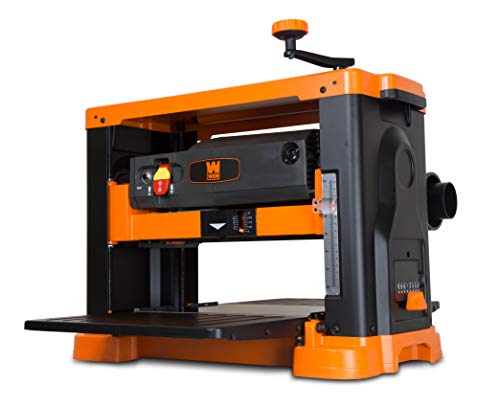
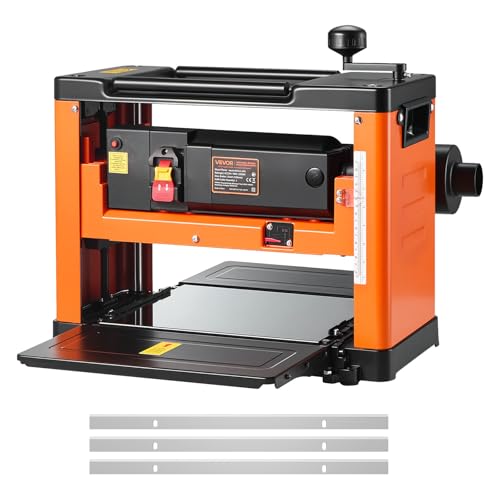
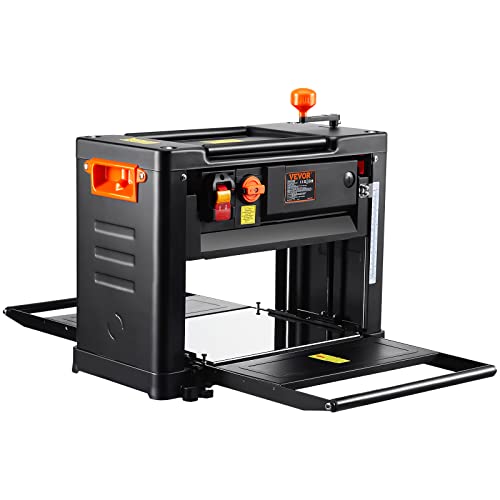
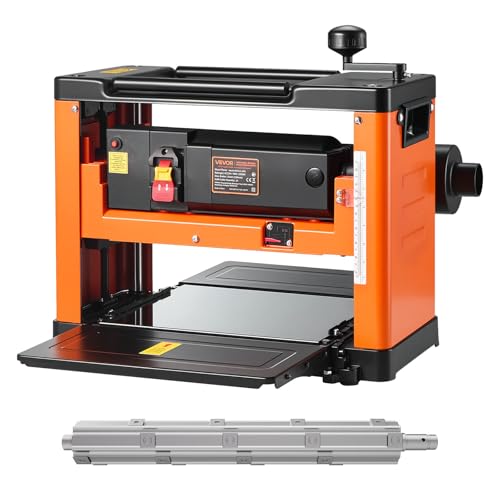
WEN Thickness Planer and Jointer Woodworking Machine Bundle (PL1337 & JT630H)
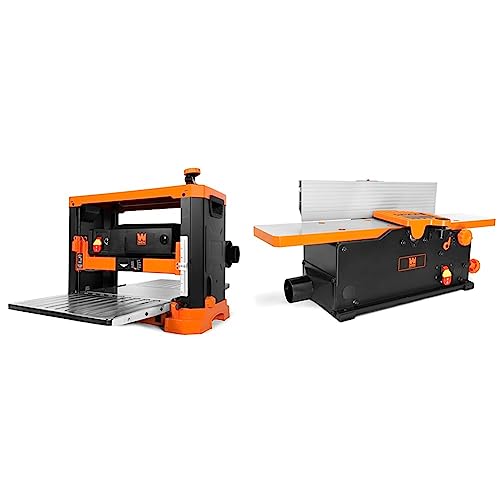
- The thickness planer features a two-speed operation with feed rates of 26 FPM for quick dimensioning...
- The jointer has a spacious 30-by-6-inch table and can remove 0 to 1/8 of an inch of material per...
- The planer can plane boards up to 6 inches thick and 13 inches wide.
The WEN Thickness Planer and Jointer bundle suits the hobbyist or small shop needing accurate, budget-friendly dimensioning and squaring without industrial bulk. It pairs a 13x6-inch planer (PL1337) with a 30x6-inch jointer (JT630H), both with spiral cutterheads and staggered HSS blades. Planer: two speeds, 26 FPM and 16 FPM; 15‑amp motor, 10,000 RPM, onboard gauge, adjustable tables, dust port. Jointer: 10‑amp, 12,000 RPM, 0–1/8" pass depth, bevel fence to 45°, spring-loaded guard, dust port. Recommended passes are 0–1/8", low speed for finishing; blade replacement: BP510H when dull. Heavy-duty base aids stability rough stock removal. Not industrial-grade, but precise, reliably.


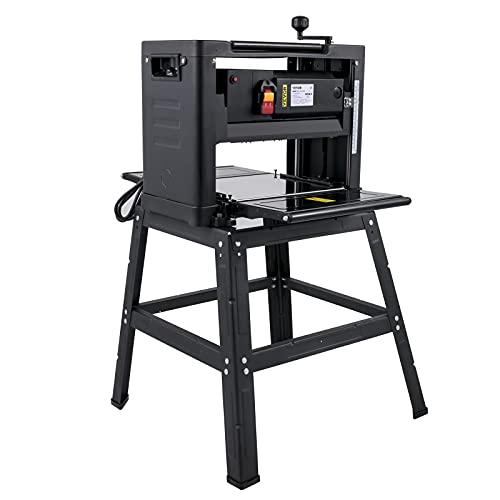

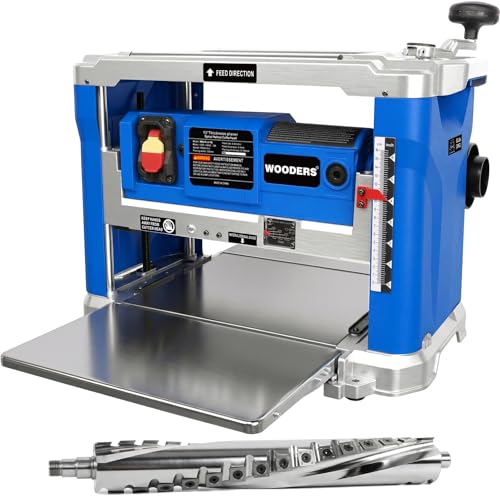
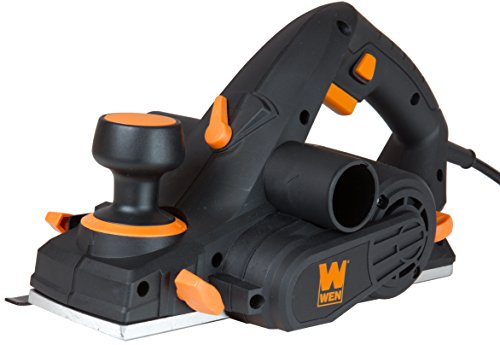
Best For: hobbyists and small woodworking shops who need accurate, budget-friendly dimensioning and squaring of small-to-medium stock.
Pros:
- Spiral cutterheads with staggered HSS blades provide a smooth, tear-out‑resistant finish.
- Planer offers two speeds (26/16 FPM), onboard gauge and adjustable infeed/outfeed tables for quick roughing and fine finishing with reduced snipe.
- Bundle includes a 13"x6" planer and 30"x6" jointer with beveling fence, spring-loaded guard, dust ports, heavy-duty base, and compatibility with BP510H replacement blades — strong value for the price.
Cons:
- Not industrial-grade — not intended for high-volume production.
- Capacity limits (13" width, 6" thickness on the planer; 30"x6" jointer table) restrict use on wider or thicker stock.
- Maximum 0–1/8" removal per pass means multiple passes are required for large material removal.
JET 13-Inch Benchtop Helical Planer (Model JWP-13BT)

- Helical-style cutterhead with 6 rows of 26 individual quick-change high-speed steel inserts for a...
- Precision-machined cast iron bed and steel cover assist in keeping boards flat and reduces snipe
- Four-post design for maximum control and support of cutterhead
A solid choice for small shops and hobbyists, the JET 13-Inch Benchtop Helical Planer (JWP-13BT) pairs a helical cutterhead and compact footprint to deliver smoother surfaces without a pro-level price. It uses a 2‑HP, 15‑amp motor at 10,000 RPM, handles 13‑inch width and up to 1/8 inch depth per pass. The 6-row helical head holds 26 quick‑change HSS inserts for quieter, finer cuts and easier maintenance. Expect 97 dB noise, 75 lb weight, and a precision cast‑iron bed. Recommended for small to medium projects; adjust feeds to reduce snipe and monitor feed rollers over time. Good value, minor caveats.
Best For: Small shops and hobbyist woodworkers who want a compact, 13-inch helical benchtop planer that delivers smoother, quieter finishes without a pro-level price.
Pros:
- Helical cutterhead with 6 rows and 26 quick-change HSS inserts for smoother, quieter cuts and easy maintenance.
- 2‑HP, 15‑amp motor and 13" cutting width on a precision cast-iron bed with adjustable infeed/outfeed tables for consistent results.
- Compact benchtop footprint (75 lb) well suited to small-to-medium projects and tight shop spaces.
Cons:
- Some users report snipe at the beginning and end of boards; careful setup and adjustments are often required.
- Rubber feed rollers can deteriorate over time, impacting feed reliability.
- Reported durability/performance issues with very hard woods and prolonged heavy use.
DEWALT 13-Inch Thickness Planer (DW735)

- 13 in. 2-Speed Thickness Planer, & Dust Hose Adapter
- Powerful 15 amp, 20,000 rpm motor handles larger cuts in wider materials with ease
- Three-knife cutter head with 10,000 rpm cutter-head speed delivers 30% longer knife life and makes...
Serious hobbyists and small‑shop professionals will find the DEWALT DW735 a workhorse that balances power, precision, and durability without breaking a typical $1,000 budget. The 15‑amp motor and three‑knife cutter head spin at 20,000/10,000 RPM, offering two feed speeds (96 or 179 CPI) for smoother finishes. It planes up to 6 in. thick, 13 in. wide, and cuts up to 1/8 in. per pass. The heavy 92‑lb cast‑aluminum base and automatic carriage lock reduce snipe; extra‑long tables add 33.5 in. support. Use the fan-assisted chip ejection plus vacuum shroud. Reliable, efficient—buy it if you need production quality and warranty.
Best For: Serious hobbyists and small‑shop professionals who want a durable, production‑quality 13" thickness planer with strong performance and good dust management at a sub‑$1,000 price point.
Pros:
- Powerful 15A motor with three‑knife cutter head and two feed‑speed options (96/179 CPI) for smooth, consistent finishes.
- Rigid 19‑3/4" cast‑aluminum base, automatic carriage lock and long infeed/outfeed tables reduce snipe and improve stability.
- Fan‑assisted chip ejection, dual dust shrouds and a solid warranty/service package (3‑year limited, 1‑year free service).
Cons:
- Heavy at 92 lb — very stable but not easily portable despite wheels.
- Capacity limited to 13" width and 6" thickness, so not suitable for larger timbers.
- Uses disposable knives (albeit reversible and longer‑lasting), which require periodic replacement and maintenance.
Grizzly Industrial G0505-12-1/2 2 HP Benchtop Planer
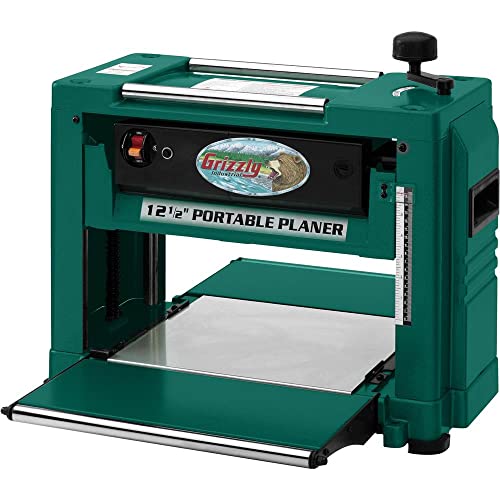
- Motor: 2 HP, 110V, single-phase, 15 Amp
- Maximum cutting width: 12-1/2"
- Maximum cutting height: 6"
Budget-conscious hobbyist woodworkers will find the Grizzly G0505-12-1/2 a pragmatic choice for small shops and occasional projects. It packs a 2 HP, 110V single-phase motor (15 A) into a 24×14×18 in, 73 lb cast-iron frame, with a 12-1/2 in cutting width, 6 in cutting height, and 3/32 in max depth of cut. Setup is fast; most users report near-ready assembly. Results are smooth, though snipe appears until feed technique improves. Watch for reported manufacturing defects, weak dust collection, and mixed support. Recommendation: buy for budget performance, inspect outfeed studs on arrival, plan upgrade if larger capacity will be needed.
Best For: budget-conscious hobbyist woodworkers with small shops who need a compact, affordable planer for occasional projects.
Pros:
- Strong price-to-performance value with a 2 HP motor and cast-iron base for solid planing results.
- Very quick, near-ready setup — users report being operational in minutes.
- Produces smooth, chip-free surfaces on a variety of woods.
Cons:
- Reports of manufacturing inconsistencies (e.g., outfeed stud alignment, occasional motor/mold issues).
- Weak dust collection/dust hood performance.
- Limited capacity (12-1/2" width, 6" height, 3/32" max cut) and some snipe unless feed technique is refined.
DEWALT 13-Inch Thickness Planer (DW735X)
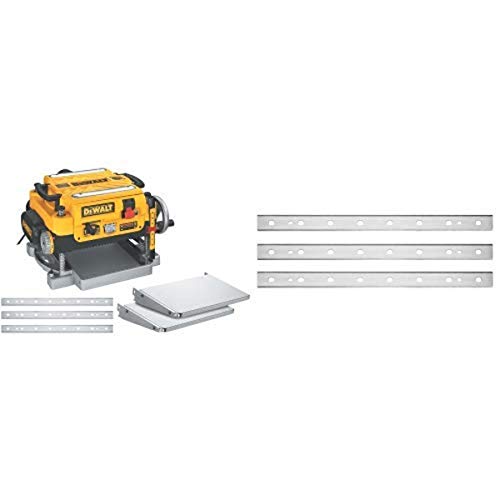
- Your purchase includes One Stationary 13" Planer, in/out feed tables, extra blades, dust hose...
- Planer dimensions: 24” L x 22” W x 18” H. Depth capacity: 6-Inch. Max depth cut: 1/8-Inch....
- Specifications: Made for 110V, not convertible to 220V. Includes automatic carriage lock that...
The DEWALT 13-Inch Thickness Planer (DW735X) suits woodworkers who need a reliable, high-capacity planer for rough lumber and frequent shop use, especially when a clean finish and throughput matter more than whisper-quiet operation. The 13" width, 6" depth capacity and 1/8" max cut pair with a three-knife cutterhead and two-speed gearbox (96/179 CPI) for smooth passes. It weighs 92 lb (24”×22”×18”), runs on 110V, and includes feed tables, extra blades, dust adapter and automatic carriage lock to reduce snipe. Expect loud operation and knife changes; customer rating 4.4/5. Recommendation: buy if throughput and finish beat quiet or blade cost.
Best For: Woodworkers who need a robust, high-capacity planer for milling rough lumber and producing smooth, high-throughput passes in a busy shop where noise and blade upkeep are acceptable trade-offs.
Pros:
- High capacity and cutting power — 13" width, 6" depth capacity, 1/8" max cut.
- Smooth finish and speed options — three-knife cutterhead plus two-speed gearbox (96/179 CPI).
- Useful accessories and anti-snipe features included — in/out feed tables, extra blades, dust adapter, automatic carriage lock.
Cons:
- Loud operation — not ideal for noise-sensitive environments.
- Knife wear and maintenance — users report blades dulling/chipping quickly, adding replacement cost.
- Heavy and limited voltage — 92 lb reduces portability; 110V only (not convertible to 220V).
POWERTEC PRO PL1303C Benchtop Thickness Planer with 3 Replacement Blades
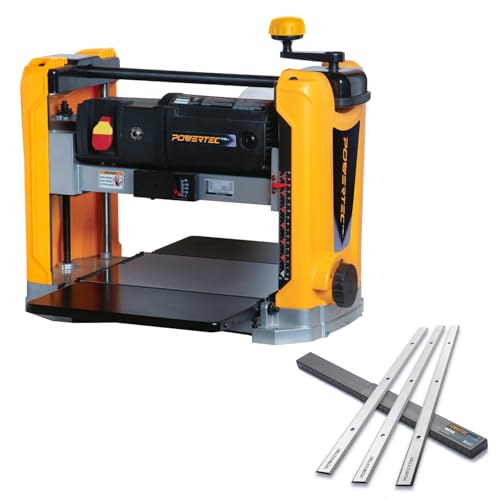
- INCLUDES: (1) Benchtop Thickness Planer; (3) Planer Blades 13" – Premium cutting tools for...
- POWER: Powerful 15 Amp 2 HP motor generates an impressive 9400 RPM speed that effortlessly handles...
- PERFORMANCE: 3-Blade cutter head with 28,200 CPM cutting speed, ensures the finest finishes of any...
POWERTEC's PL1303C benchtop planer suits hobbyists and small shops that need a compact, powerful machine for consistent, professional results. It has a 13-inch bed, 15 Amp (2 HP) motor, 9,400 RPM and 28,200 CPM cutting speed. Capacity reaches 13 inches wide and 6 inches thick; three reversible HSS blades plus three replacements are included. Depth indicator reads 0 to 1/8 inch; quick depth stop and lead-screw deliver repeatable thickness. Machined locator holes simplify blade alignment. Dust is managed by a transparent 4-inch port that connects to collectors. Construction is rugged; users give it 4.6 stars from 39 reviewers overall.
Best For: Hobbyist woodworkers and small shops that need a compact, powerful benchtop planer for consistent, professional results.
Pros:
- 15 Amp (2 HP) motor with 9,400 RPM / 28,200 CPM delivers fast, clean cuts for efficient stock removal.
- Precision features (lead-screw, depth stop, and cut-depth indicator) ensure repeatable, accurate thickness control.
- Durable reversible HSS blades with three replacements included and a transparent 4" dust port for effective dust collection.
Cons:
- Benchtop capacity limits use on very large stock (max 13" wide, 6" thick).
- Maximum cut depth of 1/8" per pass may require multiple passes for heavy material removal.
- Review base is small (39 ratings) and product ranks #94 in its category, so long-term user feedback is limited.
FindBuyTool 13-inch Benchtop Wood Thickness Planer with Helical Cutterhead
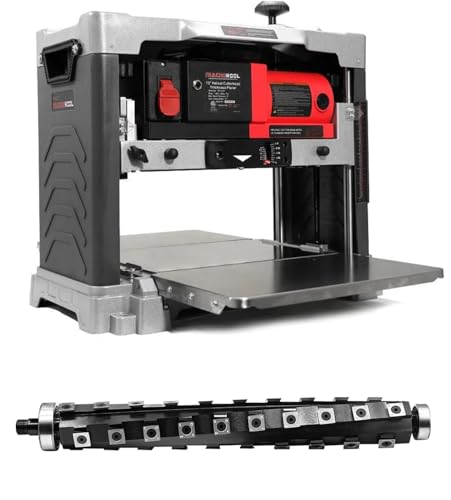
- SPECIFICATIONS: FindBuyTool thickness benchtop planer with 40 top-quality tungsten carbide insert...
- EXCELLENT COMBINATION : Our Findbuytool has been supplying the helical/spiral cutter heads to...
- INCREDIBLE ACCURACY: The 4-column design and anti-wobble foundation allow for oustanding precision...
A 13-inch benchtop planer with a helical cutterhead, the FindBuyTool is best for hobbyists and small shops that prioritize a near-sanding finish without moving up to heavy floor machines. It runs on 120V, 15A with a 20,000 RPM cutterhead and 27.5 FPM feed, allowing 0.12-inch (1/8") maximum cuts. Preinstalled helical head with 40 tungsten-carbide inserts gives tear-free surfaces that often remove the need for 180–220 grit sanding. Four-column stability and an 8-position depth stop hold tolerance under 0.1mm for repeatable thickness. At 70 lb and 23×19×16 inches it’s portable but solid. Dust collection needs upgrading; rated 4.5/5; buy cautiously.
Best For: Hobbyists and small woodshops that want a near-sanding finish from a portable benchtop planer without stepping up to heavy floor machines.
Pros:
- Helical cutterhead with 40 tungsten-carbide inserts delivers smooth, tear-free surfaces that often eliminate the need for 180–220 grit sanding.
- 20,000 RPM cutterhead, 27.5 FPM feed and 8-position depth stop provide efficient, repeatable cuts with <0.1 mm thickness tolerance.
- Solid four-column design and compact 70 lb footprint (23×19×16 in) give stability and portability for small-shop use.
Cons:
- Dust collection and dust-port accessibility are weak; many users recommend upgrading the dust setup.
- Max cutting depth is limited to 1/8" (0.12"), so it’s not ideal for heavy stock removal or high-production work.
- Some reports of loose parts, depth gauge usability issues and variable customer service/warranty support.
DEWALT 12-1/2-Inch Benchtop Planer (DW734)

- Powerful 15 amp, 20,000 rpm motor handles larger, deeper cuts in hardwoods.
- Three-knife cutter head with 10,000 rpm cutter-head speed provides 96 cuts per inch, one of the...
- Disposable, reversible knives deliver 30% more knife life and make knife change fast and easy.
Woodworkers who need a sturdy, portable benchtop planer with a 12-1/2-inch cutting width and near-professional finish will find the DEWALT DW734 a practical choice. It pairs a 15‑amp motor (20,000 RPM) with a three‑knife cutter head at 10,000 RPM, yielding 96 cuts per inch and a max depth of 0.13 in. Disposable, reversible knives last 30% longer and swap quickly. Extra-long infeed/outfeed tables give 33½ in support; a four‑column carriage lock minimizes movement and snipe. It weighs 79.8 lb and includes a dust hood. Expect excellent finish; improve dust collection for best long‑term results. Consider a vacuum on outfeed.
Best For: Woodworkers and hobbyists who need a durable, portable benchtop planer that delivers near‑professional finishes on boards up to 12‑1/2 inches wide.
Pros:
- Powerful 15 A motor and three‑knife cutter head (96 cuts/in) produce an excellent, smooth finish.
- Disposable, reversible knives extend life (~30% more) and allow quick changes.
- Extra‑long infeed/outfeed tables and four‑column carriage lock provide strong material support and reduced snipe.
Cons:
- Some users report occasional snipe despite the carriage lock.
- Chip exhaust/dust collection can be inadequate; many recommend adding a vacuum on the outfeed.
- At 79.8 lb, it's less convenient to move frequently compared with lighter benchtop models.
DEWALT 13-inch Two-Speed Thickness Planer (DW735X)

- Electric planer for wood has powerful 15 amp, 20,000 rpm motor (10,000 rpm cutterhead speed) handles...
- Three knife cutter head delivers 30% longer knife life and makes knife change faster and easier,...
- Two-speed gear box allows users to change feed speed to optimizing cuts per inch at 96 or 179 CPI
The DEWALT DW735X suits hobbyists and small-shop professionals who need a heavy-duty 13-inch planer that removes a lot of material quickly while still delivering a smooth finish. It pairs a 15‑amp motor (20,000 RPM) with a 10,000 RPM cutterhead and three-knife system for 30% longer knife life. Two feed speeds give 96 or 179 cuts per inch; max cut depth 0.13 in. Fan-assisted ejection keeps the cutter clear; a rigid 19‑3/4 in. cast‑aluminum base and automatic carriage lock reduce snipe. Include dust adapter and extra knives. Recommendation: consider a helical cutterhead upgrade for quieter, tear‑free results. Worth the buy.
Best For: Hobbyists and small-shop professionals who need a powerful, heavy‑duty 13-inch planer that removes material quickly while still delivering a smooth finish.
Pros:
- 15‑amp motor with two-speed gearbox (96/179 CPI) and 10,000 RPM cutterhead for fast, versatile material removal and good surface quality.
- Three-knife cutterhead with extra knives included for longer knife life and quicker blade changes.
- Fan-assisted chip ejection, rigid cast‑aluminum base, and automatic carriage lock reduce snipe and keep the cutterhead clear.
Cons:
- Heavy (102 lb) and bulky — awkward to move or transport without assistance.
- Standard three‑knife cutterhead can be noisier and more prone to tear‑out than a helical upgrade.
- Strong dust management requires a dust collector or shop vac (not included).
13-Inch Benchtop Wood Planer (10000 RPM, 3 HSS Blades)
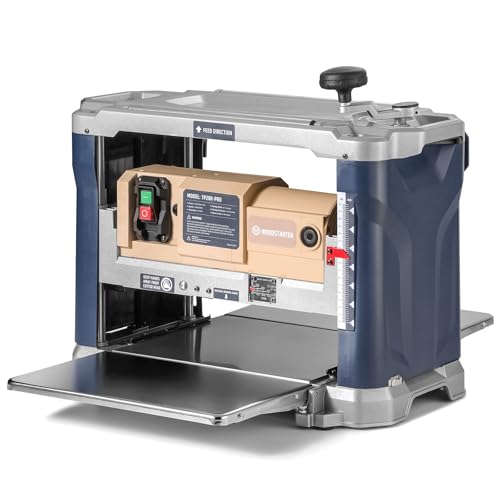
- Precision Planing: Handle stock up to 6-3/16" thick and 13" wide, from thin panels to thick slabs....
- Powerful 2000W Motor with Safety Protection: Power through thick stock without stalling or burning...
- 3-Blade HSS Cutter Head: Triple HSS Blade Cutter Head: Skip the tedious hand sanding and get...
This 13-inch benchtop planer, driven by a 2,000W motor and a 10,000 RPM cutter head with three HSS blades, suits hobbyists and small shops that need portable, high-throughput stock removal. It feeds at 21 ft/min and planes 0.25"–6.2". WOODSTARTER's 52 lb body has extensions for 29" worktable; reasonably compact. Built-in limit stop, overload protection, and a 3-in-1 dust port add utility. Reviews praise smooth hardwood finishes. Common complaints: limited dust extraction and power-cord grounding. Advice: fit a shop‑vac adapter, test grounding, start with shallow passes. Rated 4.5 stars with a 30‑day return, it’s a good value for small shops.
Best For: Hobbyists and small woodworking shops that need a portable, high-throughput benchtop planer capable of smooth hardwood finishes and moderate stock removal.
Pros:
- Powerful 2000W motor and 10,000 RPM cutter head for fast stock removal (21 ft/min).
- Three HSS blades deliver smooth, clean finishes on both softwoods and hardwoods.
- Adjustable thickness (0.25"–6.2"), 29" worktable extensions, built-in limit stop and overload protection for precise, reliable operation.
Cons:
- Dust collection can be inefficient; likely requires a shop‑vac adapter for effective extraction.
- Some users report concerns about power-cord grounding—verify grounding before use.
- Limited after‑sale coverage (30‑day return window through Amazon) rather than a long-term warranty.
13-Inch 2000W Benchtop Thickness Planer
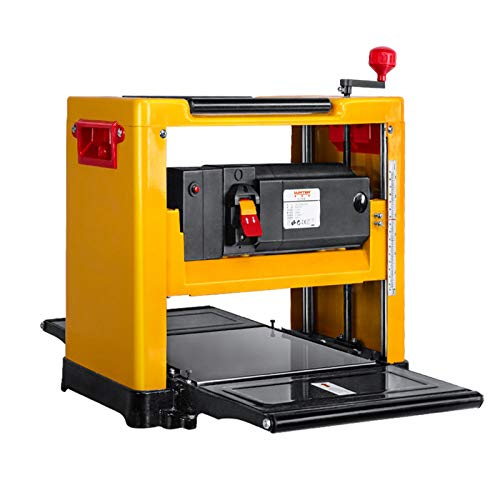
- -13 inch copper 2000W motor, high power, high efficiency, With handle for easy transportation
- -Automatic feeding, metal roller, simple operation, can process wood with a height of 160mm
- -The depth of planing can be adjusted, 0-3mm.
Ideal for hobbyists and small shops, the 13-Inch 2000W Benchtop Thickness Planer delivers compact, dependable power for routine thicknessing work. It uses a 2000W copper motor at 8,000 rpm, accepts boards 10–160mm high and 330mm wide, and removes 1–3mm per pass. Automatic metal-roller feeding, an aluminum cast base and a carry handle aid control and transport. Bracket supports up to 2m. The dual dust exhaust connects to a vacuum. Brush maintenance requires power off, unscrewing two brush caps, and replacing worn carbon brushes. Blade changes require removing the dust cover, setting cutters 1.5mm high, then tightening. Rating: 4.0 stars.
Best For: Hobbyists and small woodworking shops needing a compact, powerful benchtop planer for routine thicknessing of boards up to 330mm wide and 160mm high.
Pros:
- 2000W copper motor with 8,000 rpm delivers strong, consistent cutting power for routine planing.
- Automatic metal-roller feeding and adjustable 1–3mm one-pass depth make operation simple and repeatable.
- Dual dust exhaust (vacuum-compatible), aluminum cast base and carry handle plus a bracket for boards up to 2m improve usability and cleanup.
Cons:
- 30 kg weight makes it less convenient to move frequently compared with lighter benchtop units.
- Requires 220V power, which may limit use in regions with 110–120V mains without a transformer.
- Routine maintenance (carbon brush replacement and manual blade setup to 1.5mm) requires downtime and basic mechanical skill.
Factors to Consider When Choosing Woodworking Planers Under $1000
Buyers should start by comparing cutterhead type and size, since helical or spiral cutterheads give cleaner cuts and less tear‑out than straight knives; for most shops aim for about 12–13" cutting width and 6–8" thickness capacity. Next, check motor power, speed, and feed-rate options: prefer at least a 15A (1.5–2.0 HP / ~1,800–2,000W) motor for consistent cuts, and choose variable or multiple feed speeds roughly in the 6–30 fpm range so finish and stock removal can be balanced. Finally, insist on precise depth adjustment and repeatability — look for vernier or micro‑adjust controls with steps around 0.01" (≈1/100") or 1/64" resolution and clear scales; accuracy and a quality cutterhead beat a few extra inches of capacity.
Cutterhead Type
When finish quality matters, a helical cutterhead usually outperforms a traditional three-knife head, delivering smoother, tear-free surfaces and quieter operation. Buyers should prefer helical or spiral designs for fine furniture and veneered stock: multiple small knives, staggered or spiral, cut cleaner, reduce tear-out, and run quieter. Maintenance wins go to helical heads—replace individual inserts, not whole blades—meaning less downtime and lower parts cost. Three-knife heads cut faster at higher RPM and are fine for rough stock or heavy hogging, but expect more noise and more frequent full-knife changes. More cutting edges reduce snipe and improve support; aim for 20+ edges on smaller planers if available. Prioritize cutterhead design, chip ejection, and replaceable inserts when value and finish matter. Ignore marketing hyperbole; trust cut tests.
Width and Thickness Capacity
After choosing a cutterhead style, the next spec to lock in is how big the machine actually handles. Buyers should target a cutting width of 12–13 inches for general purpose work; that covers most boards and panels without upcharging. Thickness capacity around 6 inches gives flexibility for common lumber and thicker stock. Check the maximum depth of cut—typically about 1/8 inch—because that determines material removed per pass and impacts finish time. Prefer models with adjustable infeed and outfeed tables; they support taller boards and reduce snipe. Match cutting width and thickness to planned projects: panels, boards, or rough lumber. Be practical—don’t buy oversized capacity for occasional use. Right-size the machine, and save money and shop space. Allow small extra capacity for occasional oversized boards.
Motor Power and Speed
Power matters. Buyers should favor motors between 15 amps and 2 HP, which handle softwoods and most hardwoods without bogging. Cutterhead speed affects finish: aim for 10,000–20,000 RPM for smoother cuts and fewer snipe marks. A two-speed gearbox adds versatility; choose models offering distinct CPI settings, for example 96 and 179 CPI, to match board density. Verify adjustable cutting depth—most planers allow up to about 1/8 inch per pass—so stock removal stays controlled. Prefer heavier machines, roughly 70–100 pounds, for stability and reduced vibration. Practical steps: compare motor rating, confirm cutterhead RPM, test depth adjustment, and favor weight over portability when finish quality matters. No single spec rules, but ignore underpowered units. Check cutterhead build quality; cast-iron beds signal durability and steadier results overall.
Feed Rate Options
Matching cutterhead RPM to feed rate makes the difference between a glassy finish and a ragged one. Feed rate options usually span 16 to 28 feet per minute; choose 16–18 FPM for fine, 24–28 FPM for stock removal. Buyers should prefer planers with adjustable feed speeds or a two-speed gearbox that offers different CPI — for example 96 or 179 cuts per inch — to match grain and knife geometry. Higher feed rates speed work but raise snipe risk; slow down for thin or figured boards. Helical cutterheads let one run faster with less tear-out, lower noise, and better surface quality. Buyers should select adjustable feed control, favor two-speed gearboxes, and prioritize helical cutters for finish. Users should test settings on scrap before committing.
Depth Adjustment Accuracy
While rough stock removal tolerates larger cuts, precise thickness control demands fine, repeatable depth adjustment. Buyers should expect increments of 1/16" to 1/8" per pass; finer steps reduce sanding later. A clear depth-adjustment knob or dial with a visible gauge is essential—set it, then verify before feeding stock. Prefer models with a material-removal gauge to track cumulative cuts and avoid surprises. A quick depth stop speeds repeatable setups and saves time when batching parts. Inspect cutterhead design: solid construction and precise alignment correlate with consistent depths. If tolerances matter, avoid flimsy housings and vague scales. Practical test: set a dial, plane a test board, measure, and repeat. No drama—measure twice, plane once. Choose planers with repeatable stops and robust cutterheads for predictable, shop-ready results.
Dust Collection Capability
After dialing in repeatable depths, the sensible buyer checks how the planer handles chips and dust. Effective dust collection keeps the shop clean, reduces airborne particles, and improves visibility. Choose planers with fan-assisted ejection or dedicated dust ports; they evacuate debris faster and reduce clogging. Prefer a dust port of at least 4 inches to match common shop vacuums and collectors. Consider models that break chips into smaller particles, so cleanup is easier and internal buildup drops. Check compatibility with existing hoses and collectors; adapters can work, but fit affects suction. Practical takeaway: prioritize true port size and active ejection over marketing claims. If a planer lacks decent dust handling, expect more cleanup, poorer cuts, and faster wear. Do not skimp on dust management.
Warranty and Support
Warranty terms matter: a clear, robust policy separates a dependable planer from a hidden liability. Buyers should prefer warranties of two to five years; shorter periods cost more in risk. Look for limited warranties that explicitly cover parts and labor, with clear exclusions and service windows. Verify customer support options: dedicated phone lines, authorized service technicians, and documented repair turnaround times. Check return policies—30-day satisfaction guarantees offer useful fallback. Before purchase, read user reports about warranty claims, repair quality, and responsiveness; patterns matter more than single anecdotes. Actionable steps: confirm warranty length, request written terms, note service centers within 100 miles, and keep receipts. Record serial numbers and photos before first use. Practical, not sentimental.
Frequently Asked Questions
How Do I Safely Plane Green or Wet Wood?
The woodworker should plane green wood only for roughing, not final sizing. Use very sharp blades, shallow passes (≤1/32" / 0.8 mm), and slow feed. Prefer spiral or high‑helix cutterheads and carbide knives to reduce tear‑out and gumming. Support stock fully with infeed/outfeed tables and sacrificial sleds to prevent snipe. Check moisture with a meter; wait until roughly 8–12% MC for final surfacing. Wear eye, ear protection and a respirator.


What Personal Protective Equipment Is Essential When Using a Planer?
About one-third of woodworking injuries involve the hands. Operators should wear ANSI Z87.1 safety glasses plus a full-face shield for chips, hearing protection rated NRR 25–30 dB (prefer over-ear muffs), and a NIOSH-certified N95 at minimum—P100 for heavy dust or MDF. They should wear close-fitting clothing and closed-toe, non-slip shoes, and avoid gloves near a planer, using push blocks and featherboards instead. They should replace damaged PPE immediately, always.
Can Planers Be Used Outdoors in Cold or Humid Climates?
They can, but performance and longevity suffer without precautions. Cold below 5°C (40°F) thickens lubricants, reduces battery capacity; humidity above 60% drives rust and wood swelling. Use shelter, raised stable base, and weatherproof cover; prefer machines with sealed motors or IP54 rating, stainless fasteners, and carbide blades. Warm up cutterhead before fine passes, remove batteries overnight, wipe and oil metal daily. Outdoor use is compromise. Avoid it when precision matters.
How Do I Dispose of or Recycle Planer Blades and Carbide Inserts?
By coincidence, they notice a dull blade the week the metal drop‑off opens. They should dispose and recycle planer blades and carbide inserts this way: clean chips, wrap cutting edges in 3–5 layers of cardboard, place in a rigid metal or plastic box, tape and label. Use a magnet: magnetic = steel to scrap yard; non‑magnetic = tungsten carbide to specialist recyclers or manufacturer take‑back. Don't toss loose. Landfills hurt.


Will a Planer Affect Insurance or Home Workshop Safety Compliance?
A planer can affect insurance and workshop safety compliance. Insurers assess fire, dust, and injury risks; building codes and safety standards require guards, dust collection, proper wiring, ventilation, and e-stopping. The owner should install a 99% efficient dust collector, dedicated 20A circuit, grounded outlets with GFCI, blade guards, and a labeled circuit breaker. Keep documentation, service records, and UL/CE-certified equipment. Ignore basics and premiums or claims may rise. Non-negotiable steps.
Final Thoughts
The woodworker should pick machines by cut width, motor power, cutter type, and feed speed. Favor 13‑inch planers with 15‑amp (1.5–3 HP) motors, helical cutterheads or 3‑knife HSS, and 8–30 FPM feed rates for smooth finish. Prioritize dust collection ports, height stops, and replaceable knives. Spend up to $1,000 for durability; save only on cosmetic extras. Test a sample board before buying. Treat the planer like a surgeon's scalpel. Measure twice, trim once, demand consistency.
 7 Best Woodworking Planers for the Money: Budget-Friendly Picks That Deliver Smooth Results
 12 Best Professional Woodworking Planers of 2025 — Powerful Picks for Your Shop
Budget-Friendly Woodworking Tools Under $100: Essential Deals for Hobbyists




Premium Woodworking Equipment: Professional-Grade Tool Savings


If you want to know other articles similar to The 11 Best Woodworking Planers Under $1,000 — Expert Picks for Precision & Value you can visit the Planers category.
This is also interesting