
7 Best Woodworking Planers for the Money: Budget-Friendly Picks That Deliver Smooth Results


This list names seven budget planers that balance price, power, and finish. Makita 2012NB, 12-inch portable with InternaLok head clamp and dust hood. Makita KP312, 12.25-inch, 15 A motor for fast removal. Shop Fox W1812, 2 HP planer/moulder. Shop Fox W1842, 1.5 HP, 13-inch width. Grizzly G0815-15, 3 HP, 15-inch capacity. POWERTEC UT1012C, 13-inch benchtop planer. KAKA WM-3020, five-in-one combo for tight shops. Compare HP, cutterhead, and dust-port size to decide — more details follow below.
- Main Points
- Makita 2012NB 12-Inch Planer (Interna-Lok Automated Head Clamp, Dust Collector Hood)
- Shop Fox W1812 Planer Moulder with Stand
- Makita KP312 12-1/4 Planer
- Shop Fox W1842 Planer/Moulder
- Grizzly Industrial G0815-15 3 HP Heavy-Duty Planer
- POWERTEC UT1012C 13 Inch Benchtop Thickness Planer and 6 Inch Benchtop Jointer with Flip Top Tool Stand
- KAKA INDUSTRIAL 5-in-1 Multifunctional Woodworking Machine (WM-3020)
- Factors to Consider When Choosing Woodworking Planers for the Money
-
Frequently Asked Questions
- Can These Planers Handle Pressure-Treated or Chemically Treated Lumber?
- Do They Require a Dedicated Electrical Circuit or Special Wiring?
- Are Replacement Knives and Parts Readily Available for Older Models?
- Can Planers Be Converted to Spiral Cutterheads Later?
- What Are Typical Resale Values for Budget Planers After Several Years?
- Final Thoughts
Main Points
- Choose a planer's power and cutting width matched to your projects—aim 1.5–3 HP and 12–15 inch capacity for most hobbyists.
- Prefer helical/spiral cutter heads or quick-change knives for quieter operation and longer blade life.
- Consider budget-friendly models like Makita 2012NB and Shop Fox W1842 for hobbyists balancing portability, price, and finish quality.
- Prioritize solid dust collection (2-inch port minimum) and cast-iron tables to improve finish and shop cleanliness.
- Read user reviews, compare warranties, and verify power requirements before buying to ensure value and long-term performance.
Makita 2012NB 12-Inch Planer (Interna-Lok Automated Head Clamp, Dust Collector Hood)

- Compact with less weight for easy transporting to the jobsite
- Engineered for faster, easier blade changes
- Ideal hood to connect the planer to a dust collector system
The Makita 2012NB 12‑inch planer is best suited to the hobbyist or small-shop woodworker who needs a portable, easy-to-set-up machine that still delivers a clean finish. Makita’s 2012NB (teal, model/part 2012NB) is compact, lightweight and ships with an Interna-Lok automated head clamp and a dust collector hood. It runs manually, accepts standard 12‑inch boards, and earns about 4.6/5 from four users who note quieter operation and good finish. Recommended for occasional surfacing and edge planing; secure stock, make shallow passes (0.005–0.02 in), empty hood regularly, and keep service info handy under warranty. Good value. No nonsense. Buy if practical.


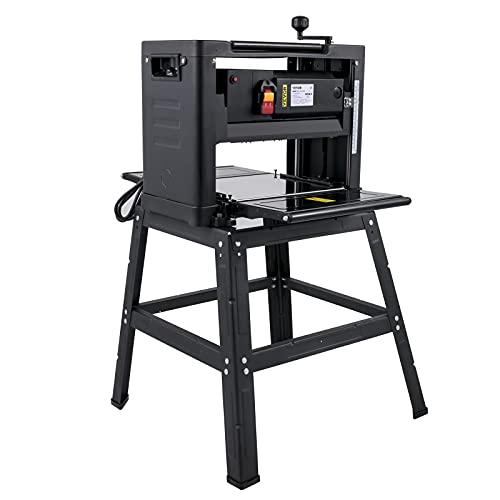

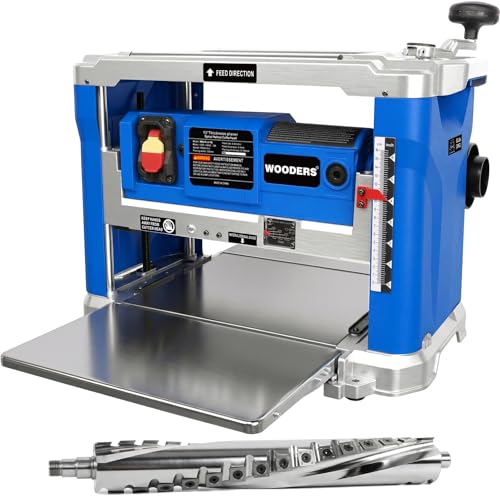
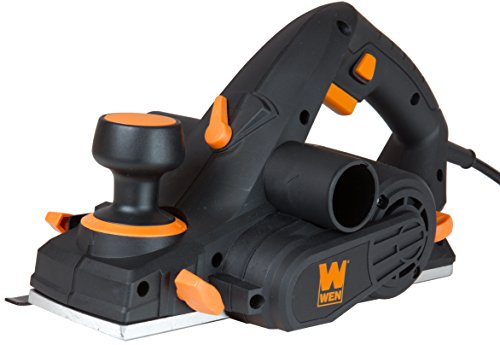
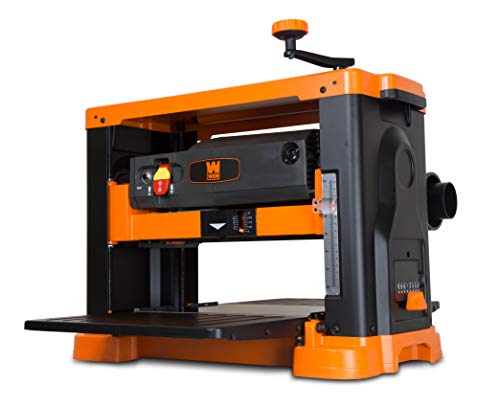
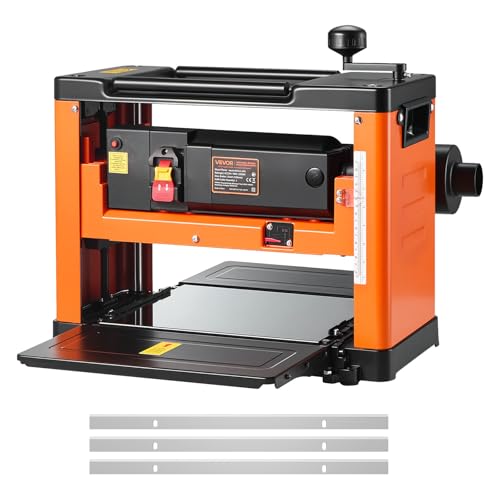
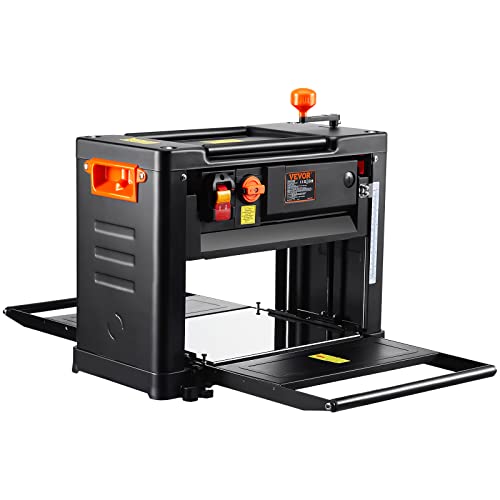
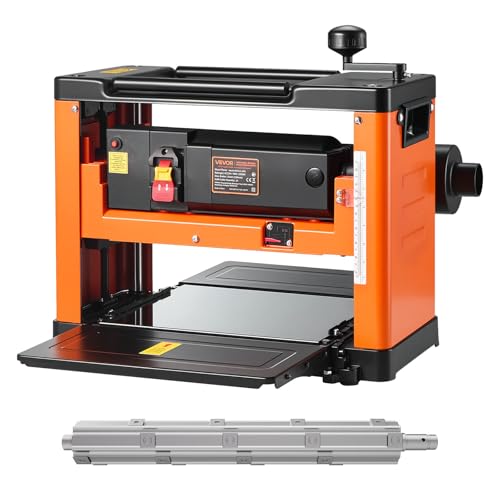
Best For: Hobbyist or small-shop woodworkers who need a portable, easy-to-set-up 12" planer for occasional surfacing and edge planing.
Pros:
- Quieter operation with good finish quality reported by users.
- Compact, lightweight and easy to transport and set up.
- Comes with Interna-Lok automated head clamp and dust collector hood for cleaner, more convenient use.
Cons:
- Manual operation (no powered feed) limits throughput and convenience.
- Not suited for heavy-duty or production shop use.
- Requires shallow passes (0.005–0.02 in) and regular emptying of the dust hood, slowing work.
Shop Fox W1812 Planer Moulder with Stand

- Item may ship in more than one box and may arrive separately
- Main motor: 2HP, 220V, single-phase, TEFC, 3450 RPM, Power feed motor: 1/4 HP, 180VDC, 1.5A, Feed...
- Precision-ground cast iron infeed and outfeed extension wings
Shop Fox’s W1812 suits hobbyists and small shops that need a heavy-duty, budget-friendly planer/moulder for custom trim and furniture work. It packs a 2 HP, 220V TEFC motor (3450 RPM), 7000 RPM cutter head, 0–18 FPM feed, and .75" cutting depth, on a 191 lb cast-iron frame. Assembly takes about 45 minutes; help needed for heavy parts. Knife changes are straightforward, though feed-roller tension and knife alignment can be finicky. Users report smooth, low-vibration cuts and durability; chip collection is average, so add a shop vac. Warranty is two years; value compares well to Williams. Recommended for budget-minded makers.
Best For: hobbyists and small woodworking shops that need a budget-friendly, heavy-duty planer/moulder for custom trim and furniture work.
Pros:
- Powerful 2 HP TEFC motor and 7000 RPM cutter head produce smooth, low-vibration cuts.
- Precision-ground cast-iron construction, variable speed/feed, and easy knife changes support consistent, long-run performance.
- Competitive price and two-year warranty provide strong value compared with higher-cost brands.
Cons:
- Requires 220V power, which may need a dedicated circuit or outlet upgrade.
- Feed-roller tension and knife alignment can be finicky and require careful setup.
- Average chip collection (many users add a shop vac) and some reports of mixed customer support/parts delays.
Makita KP312 12-1/4 Planer
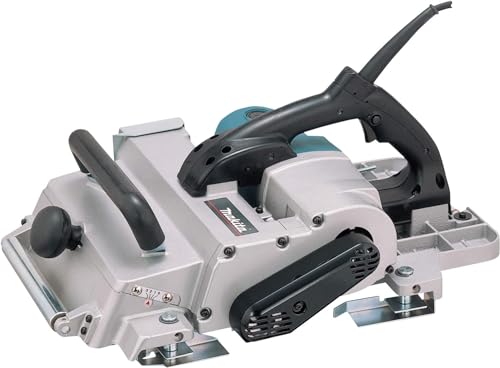
- Powerful 15 AMP motor with 12,000 RPM for improved performance
- Large, conveniently located depth setting knob for easy adjustment
- Poly "V" belt designed with grooves efficiently transfers power from the motor to the blades
Professional timber framers, log‑home builders, and boat fabricators will find the Makita KP312 built for heavy, wide surfacing where speed and repeatable accuracy matter. It packs a 15‑amp motor at 12,000 RPM, planes 12‑1/4" wide and up to 1/8" deep per pass. Recommend using poly V belt maintenance and checking double‑edged HSS blades; consider Shelix upgrades for longer life. The large depth knob, front roller, and spring‑loaded stand speed setup and protect work. Note 33‑ft cord placement, rubberized handle, and 40.6 lb weight for transport. One‑year warranty; factor blade cost into ownership. Users rate it highly despite blade costs.
Best For: professional timber framers, log‑home builders, and boat fabricators who need fast, wide, repeatable surfacing with industrial power and accuracy.
Pros:
- 15 A, 12,000 RPM motor planes up to 12‑1/4" wide and 1/8" deep in one pass for high productivity.
- User‑friendly features (large depth knob, front roller, large ejection chute, spring‑loaded stand) speed setup and protect workpieces.
- Robust construction (poly V belt, ball bearings, double‑edged HSS blades) and strong user ratings for reliability.
Cons:
- Replacement blades can be costly and have limited lifespan unless upgraded (e.g., Shelix).
- At 40.6 lbs it can be awkward to transport and maneuver on job sites.
- Only a one‑year warranty — owners must factor maintenance/consumable costs into total ownership.
Shop Fox W1842 Planer/Moulder
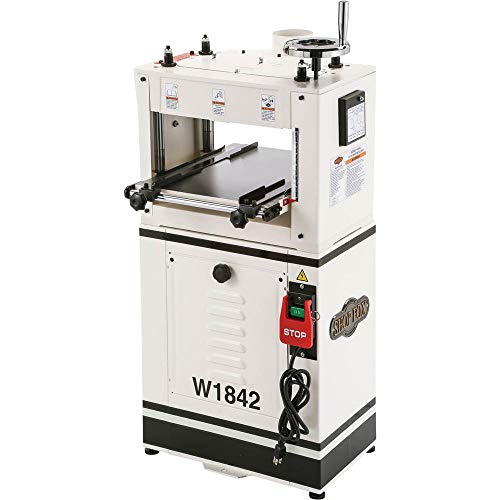
- Motor: 1. 5 HP, 110V/220V, prewired 110V, single-phase, 15A/7. 5A
- Maximum cutting width: 13" (planning)
- Maximum width capacity: 4-9/16" (moulding)
Budget-minded hobbyists and small shops will find the W1842 a practical entry-level planer/moulder when they need to shape baseboards, crown, and casings without paying pro prices. The Shop Fox W1842 offers a 1.5 HP single-phase motor (prewired 110V), 13" maximum cutting width, 6" height capacity, three HSS knives and 0.13" cutting depth, on a cast-iron base weighing 217 pounds. It includes adjustable guide rails and a top-access cutter head; optional moulding knives expand profiles. Expect low vibration but modest motor power. Recommended: add infeed/outfeed supports, clear roller chips often, and upgrade to a 3HP motor if planning heavy production.
Best For: Budget-minded hobbyists and small shops needing an affordable entry-level planer/moulder for shaping baseboards, crown moulding, casings and light production work.
Pros:
- Stable cast-iron base with low-vibration, quiet operation and a 13" cutting width / 6" height capacity.
- Three HSS knives, top-access cutter head and adjustable guide rails make blade changes and setup easy and accurate.
- Optional moulding knives expand profile options without buying a larger machine.
Cons:
- Modest 1.5 HP motor (prewired 110V) limits heavy stock removal; many users upgrade to 3 HP for production use.
- Shallow maximum cutting depth (0.13") and limited moulding width for some profiles.
- Chips can collect between rollers and tables, and it lacks built-in infeed/outfeed supports; some buyers report mixed customer-service experiences.
Grizzly Industrial G0815-15 3 HP Heavy-Duty Planer
We are sorry but these products are temporarily out of stock.
The Grizzly G0815-15 3 HP planer is built for small shops and serious hobbyists who need heavy-duty stock removal and a full 15‑inch cut capacity. It packs a 3 HP, 240V, 14A motor and cuts up to 15 inches wide, 8-1/4 inches thick stock at a maximum 5,000 RPM. Weighing 380 pounds on a cast-iron base, it resists chatter during heavy passes. Requires a 240V, 6-20 receptacle; install a planer master shut-off and a four-inch dust/chip system. Owners rate it 4.9/5, though missing key stops have appeared; fix properly before first use. Upgrade hearing and face protection; consider soundproofing.
Best For: small shops and serious hobbyists who need heavy‑duty stock removal and full 15‑inch cutting capacity with a stable, cast‑iron 3 HP planer.
Pros:
- Powerful 3 HP, 240V motor delivers heavy-duty stock removal and up to 5,000 RPM.
- Full 15" cutting width and up to 8-1/4" thickness capacity for large stock.
- Cast-iron base (380 lb) reduces chatter for smoother cuts; highly rated by owners (4.9/5).
Cons:
- Requires a 240V, 6-20 receptacle and dedicated circuit — not compatible with standard 120V outlets.
- Heavy and bulky (380 lb) — needs assistance to move and proper installation.
- Some users reported missing key stops and minor setup issues; dust collection, safety, and soundproofing upgrades recommended.
POWERTEC UT1012C 13 Inch Benchtop Thickness Planer and 6 Inch Benchtop Jointer with Flip Top Tool Stand

- INCLUDES: (1) Flip Top Tool Stand with Caster Wheels (1) 6-Inch Benchtop Jointer (2) Push blocks (1)...
- INSTANT TOOL CHANGES: Transform your workshop with this flip-top powerhouse. Mount a benchtop...
- SPACIOUS & COMPATIBLE OF STAND: With a 30.5" height and a generously sized 25" x 20.6" tabletop...
For hobbyist woodworkers who need both a planer and a jointer without buying two full-size machines, the POWERTEC UT1012C bundles a 13‑inch, 2‑HP (15 A, 9,400 RPM) benchtop planer with a 6‑inch jointer on a flip‑top tool stand, making it a practical shop-space saver. The planer accepts stock up to 13 inches wide and 6 inches thick, powered by the 15 A, 2 HP motor. The jointer's 10 A cutterhead makes 22,000 cuts per minute and removes up to 1/8 inch per pass. The flip stand with casters and a 25 x 20.6 inch tabletop saves space; expect assembly.
Best For: Hobbyist woodworkers and small-shop carpenters who want both a 13" planer and a 6" jointer in a single, space-saving benchtop setup.
Pros:
- Combines a 13" 2 HP (15 A) planer and a 6" jointer on one flip-top stand, saving shop space.
- Sturdy build with caster-equipped flip-top tool stand for easier mobility and instant tool changes.
- Good performance specs (planer up to 6" thick, jointer removes up to 1/8" per pass at 22,000 cpm) for DIY and light professional use.
Cons:
- Some users report assembly challenges and unclear instructions.
- Concerns about shelf size/material quality and overall weight capacity for heavier tools.
- Dust collection requires an additional fitting (POWERTEC 70365 elbow sold separately) for optimal performance.
KAKA INDUSTRIAL 5-in-1 Multifunctional Woodworking Machine (WM-3020)
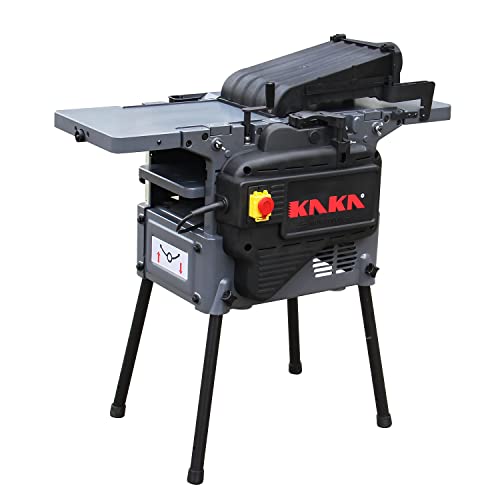
- 5-in-1 Multifunctional Woodworking System - Combines planing, thicknessing, sawing, milling, and...
- Powerful 2.2kW Motor & High 5500 RPM Speed - Equipped with a robust 2.2kW (approx. 3 HP) motor...
- Portable Design with Integrated Support Legs - Features a portable design and includes supporting...
Small shops and serious hobbyists will find the KAKA WM-3020 a practical all-in-one that trades bench crowding for functional versatility. It combines planing, thicknessing, sawing, milling and drilling, powered by a 2.2 kW motor at 5500 RPM. Planing capacity handles stock up to 9.8 inches wide and 6.3 inches high; saw depth to 3.35 inches. Tables measure 29.5×20 and 14.5×7.8 inches for saw and drill/mill work. A stable bench, proper clamping up to 2.36 inches, and 220V supply are required. Good for hobbyists and small shops; expect solid value. Training pays off; read manual and study specs before purchase.
Best For: small shops, serious hobbyists, and DIY home improvers who want a space-saving all‑in‑one machine for planing, thicknessing, sawing, milling and drilling.
Pros:
- 5‑in‑1 multifunctionality replaces multiple machines and saves bench space.
- Powerful 2.2 kW (≈3 HP) motor at 5500 RPM handles hardwoods and routine shop tasks.
- Compact/portable design with large saw table (29.5 × 20 in) and 0–45° angle adjustment for versatility.
Cons:
- Requires 220V single‑phase supply, limiting use in standard 110V-only locations.
- Clamping capacity (max 2.36 in) and saw depth (3.35 in) restrict larger workpieces.
- At ~172 lbs net weight, it’s heavy to move frequently despite being “portable.”
Factors to Consider When Choosing Woodworking Planers for the Money
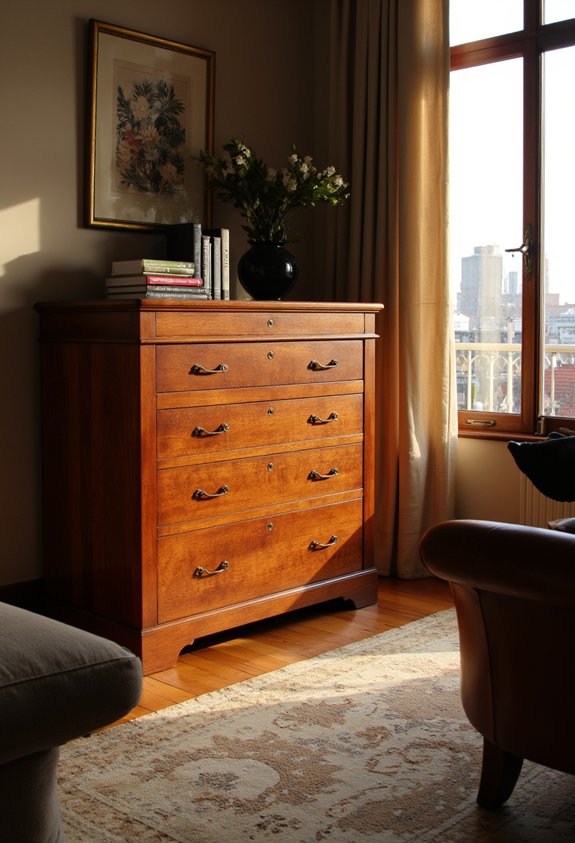
A practical buyer should rank power, cutting capacity, blade system, build quality, and dust collection as primary decision points when choosing a planer for the money. Aim for 1.5–3 HP on benchtop units (3–5 HP for stationary machines), a cutting width that matches intended boards—12–13 inches for full‑width stock or 6–8 inches for small parts—and a per‑pass depth of about 1/16"–1/8"; prefer helical/spiral heads for quiet, long life and quick‑change inserts, accept two‑ or three‑knife heads only if willing to sharpen often; insist on cast‑iron or heavy steel tables and a 4" dust port (or equivalent shroud) paired with 300–500 CFM extraction for reasonable cleanliness. Match motor size to workload, choose a durable cutter head over fancy extras, and budget a little extra for solid cast parts and effective dust control—cheaper units save money up front but will cost time in sharpening and cleanup.
Power and Motor Size
Motor size sets the baseline: it decides what a planer can remove in one pass, whether it holds speed under load, and how smooth the finish will be. Planers with 1.5–3 HP suit hardwood; 3 HP fits heavy-duty use. Higher RPM cutter-heads provide faster cutting action and finer finish; buyers should favor models with higher RPM and good knife quality. Dual-voltage (110/220V) models add shop flexibility and suit varied outlets. Heavier planers over ~200 lb reduce vibration and improve surface quality. Power-feed motor size and feed-speed ratings determine throughput; stronger feed motors and adjustable speeds improve consistency. Practical rule: match motor power to material density and workload. No motor can substitute for feed rate and sharpened knives, especially during long runs and heavy use.
Cutting Width and Depth
Several clear measurements drive the choice: cutting width governs the maximum board the planer will accept, while cutting depth sets how much stock can be removed per pass. Buyers should match width to material: common models span 12 to 15 inches, so choose 15-inch for wider boards, 12-inch for small projects. Depth ranges typically from 1/8 inch to 3/4 inch per pass; larger depths speed preparation but demand power and care. For heavy-duty work and dense hardwoods favor machines with greater depth capacity and stronger motors. For hobbyists, modest depth reduces tear-out and tool strain. Practical steps: list board sizes, note wood species, pick the smallest width that fits and a depth rating that handles the densest wood you expect. No guesswork. Act decisively.
Blade Type and Changeover
After settling on width and depth, blade type and changeover determine how quickly boards move from rough to finished. Choose blades based on workload: HSS is common, sharp and durable for general use; carbide costs more but holds its edge far longer, cutting changeovers. Favor planers with quick-release or tool-free blade systems — they save minutes and reduce frustration. Dual-sided blades deserve priority; flip or rotate before full replacement. Check for aftermarket profiles and specialty blades to expand capability. Maintain blades: inspect before each run, flip or sharpen at first dulling, replace when chips or motor strain appear. Keep a spare set and basic tools. The rule: minimize downtime, maximize sharpness, protect the motor. If budget tight, prioritize quick-change over exotic blade options first.
Build Quality and Materials
Because stability and tolerance drive finished results, build quality should be the first filter when choosing a planer. Buyers should prefer cast iron or thick gauge cast bases for flatness and longevity; aim for base mass above 40 to 60 lbs for benchtop units. Inspect precision ground tables and knives, runout under 0.005 in is excellent; 0.01 in acceptable. Choose planers with high grade steel knives or carbide options to extend edge life and maintain cut quality. Heavier, well braced frames reduce vibration. Check manufacturing fit: tight seams, consistent finishes, and smooth fence action predict fewer alignment headaches. Practical test: push a sample board at full depth; listen for chatter. If it vibrates, move on now. No romance, pick solid metal and tight tolerances.
Dust Collection Efficiency
Prioritize dust collection as a core feature, not an afterthought. Buyers should choose planers with a dedicated dust collection port and a clear minimum size: 2 inches (50 mm) or larger for basic use; 4 inches (100 mm) for heavy or dense hardwoods. Look for large ejection chutes, improved chip-clearance channels, and angled exits to prevent clogging. Test for direct-fit to common shop vacs or 4" dust extractors. Expect performance to vary by material: denser woods throw more shavings and demand higher-capacity extraction and more frequent emptying. If a budget model lacks a proper port, reject it or plan to retrofit with a larger hood. Good dust control improves safety, cleanup time, and finish quality. No dust rule: stronger collection beats fancy trims always.
Portability and Footprint
While portability matters, the real test is whether a planer will fit the workshop and the work routine without constant contortions. Weight matters: compact planers under 50 pounds move easily between sites; heavy units over 200 pounds usually stay put. Footprint matters: benchtop models require minimal space; full-size machines need a dedicated area. Check metrics: overall dimensions, infeed/outfeed clearances, and storage height. Look for practical features: foldable stands, built-in wheels, or removable tables. Action steps: measure floor space, measure doorways, lift test or use casters, and compare specs. Tradeoffs are clear: choose mobility for job-to-job convenience, stability for production work. No romanticizing—pick the size that matches the shop and the workload. If space is tight, buy compact; if not, buy rigid — stop hesitating.
Frequently Asked Questions
Can These Planers Handle Pressure-Treated or Chemically Treated Lumber?
They can plane pressure‑treated lumber, but caution is required. Blades dull faster; expect 2–5× shorter tool life with treated stock. Use carbide knives, slower feed rates (8–15 ft/min), shallow passes (0.010–0.030 in), and aggressive dust collection. Wear a respirator and nitrile gloves; wash equipment after use. Check warranty—some manufacturers void coverage for treated timber. If frequent work on treated wood is planned, choose industrial-grade cutters and maintenance schedule, rigidly enforced.
Do They Require a Dedicated Electrical Circuit or Special Wiring?
Most planers — about 80% — draw 12–15 amps, so they usually run on a standard 120V/20A circuit. The short answer: benchtop models rarely need special wiring; larger stationary planers often do. The operator should check the nameplate for volts, amps, and horsepower. If motor exceeds 15–20 amps or is 2+ HP, install a dedicated 120V/20A or 240V circuit with proper breaker and gauge. Consider a soft-start and electrician confirmation.
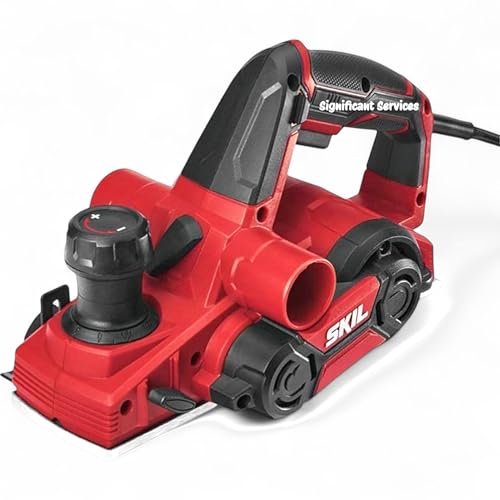
Are Replacement Knives and Parts Readily Available for Older Models?
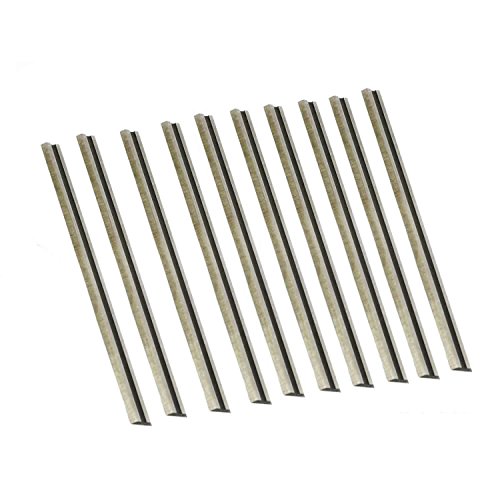
They are generally available for many older planers. Aftermarket knives, springs, belts and bearings can be found from OEMs, specialty suppliers and online marketplaces; check knife width (e.g., 6", 8", 12"), thickness (e.g., 3/32", 1/8") and cutterbar type before ordering. Verify part numbers, test fit, or buy a matched set. If the model is obscure, expect longer lead times, higher cost, or a need for custom grinding. Plan accordingly now.


Can Planers Be Converted to Spiral Cutterheads Later?
Yes. The woodworker can often actually retrofit a spiral cutterhead, but only after confirming spindle diameter, cutterhead width, and motor capacity. Measure shaft diameter (commonly 1–1.25 inches), match cutterhead width to table capacity (12–20 inches), and guarantee motor ≥1.5–3 HP for continuous cuts. Steps: read manual, contact manufacturer, buy a matched kit, verify balancing and mounting hardware, adjust feed rate and dust collection. Not always worth it on cheap units.


What Are Typical Resale Values for Budget Planers After Several Years?
A seller can expect resale around 20–40% of new price after 3–5 years, lower for heavy wear and higher for well-maintained units with upgraded cutterheads. Sellers should inspect blades, motor, bed flatness, and table alignment; they should test for chatter and belt slippage. Routine cleaning, servicing, receipts, and fresh blades can boost value 5–10%. Listing full specs in niche groups helps. Low-end tools rarely hold value. Sales often occur quickly.

Final Thoughts
Buyers should match capacity, power, and cutter design to projects. Choose 12 to 13 inch capacity; about 3 HP for repeated hardwood work; helical or carbide cutterheads for quiet life; cast-iron tables and depth stops for flatness and repeatability; four inch dust ports for health. For budgets under $600 pick benchtop Makita; over $1,000 favor heavy-duty Grizzly. Measure stock, set 1/16 to 1/8 inch passes, and test cuts. Work smart, cut less. Then buy wisely.
 12 Best Professional Woodworking Planers of 2025 — Powerful Picks for Your Shop
 The 11 Best Industrial Woodworking Planers of 2025 — Heavy-Duty Power & Precision
 Shop Fox W1842 Review: Custom Profiles Without a Shaper
Budget-Friendly Woodworking Tools Under $100: Essential Deals for Hobbyists




Premium Woodworking Equipment: Professional-Grade Tool Savings


If you want to know other articles similar to 7 Best Woodworking Planers for the Money: Budget-Friendly Picks That Deliver Smooth Results you can visit the Planers category.
This is also interesting